
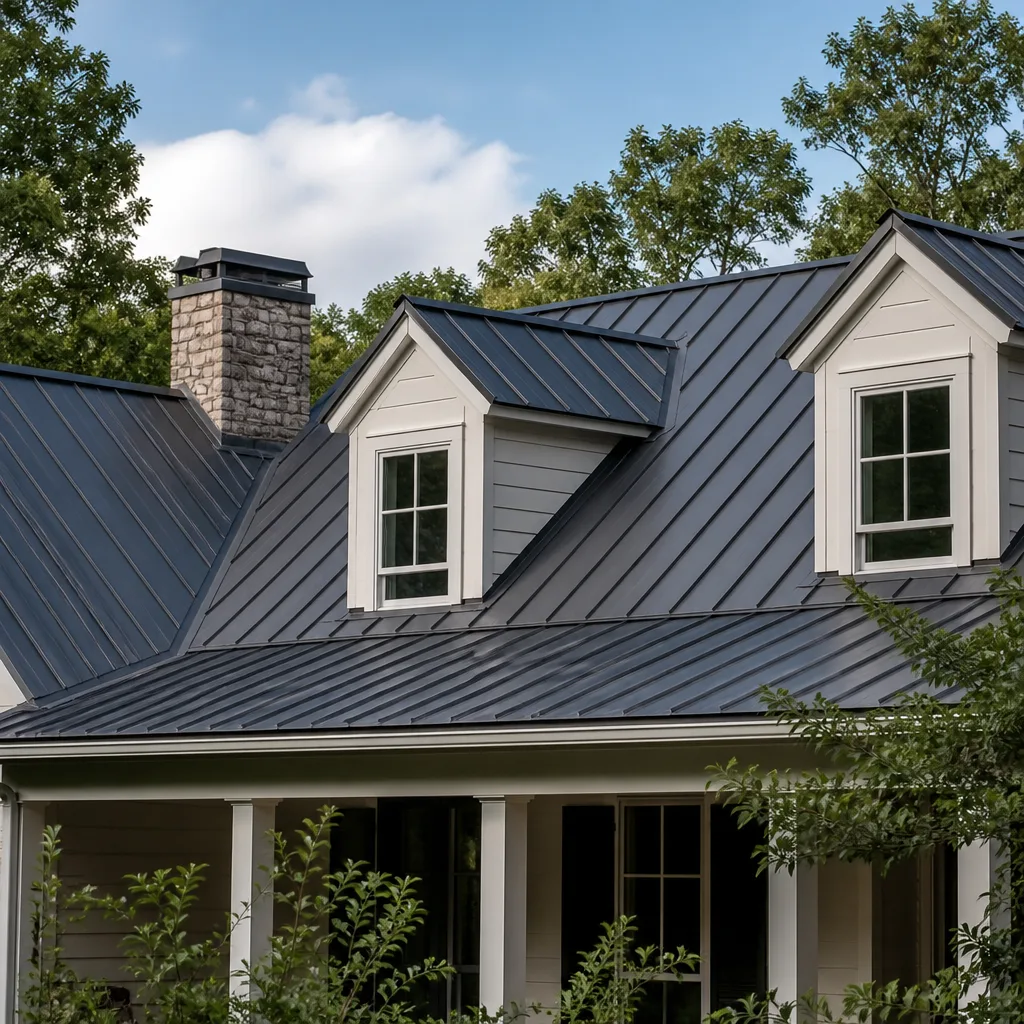
 Metal roofing
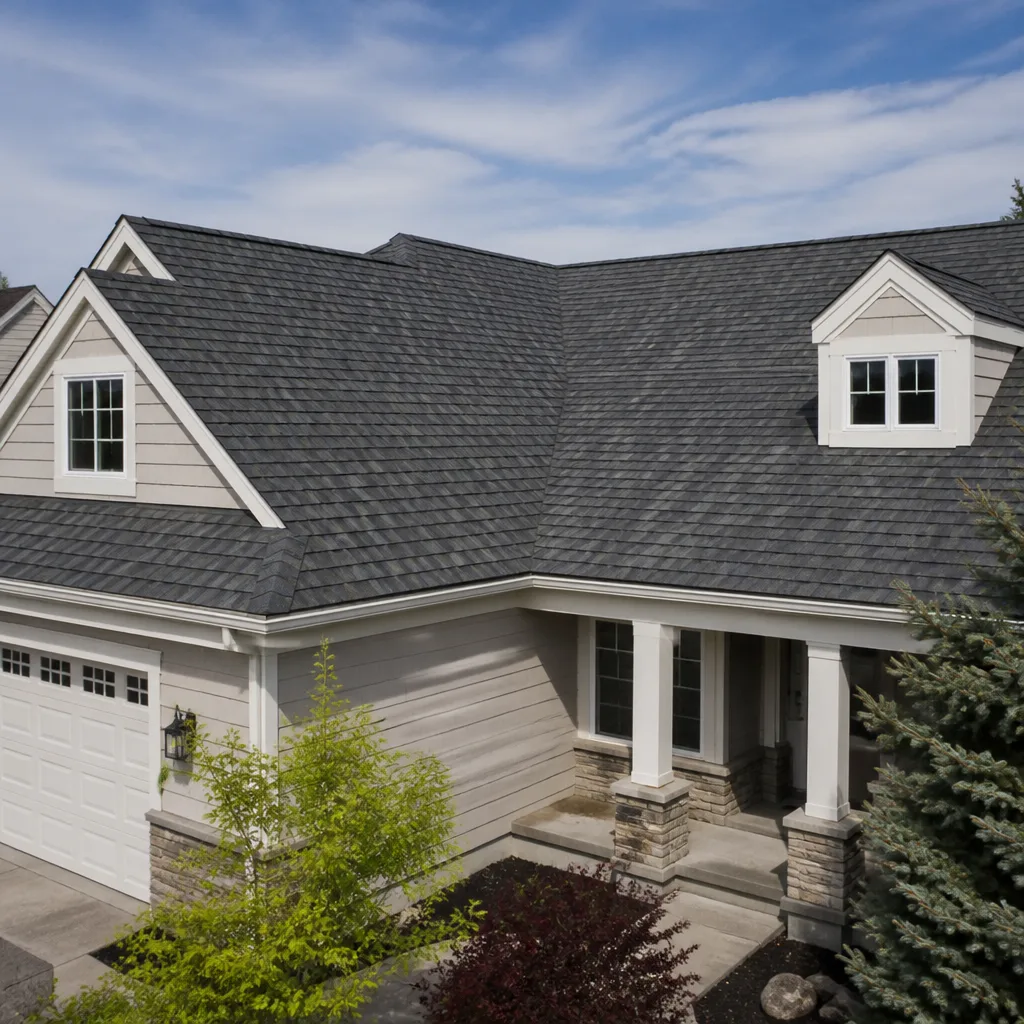 Architectural shingles
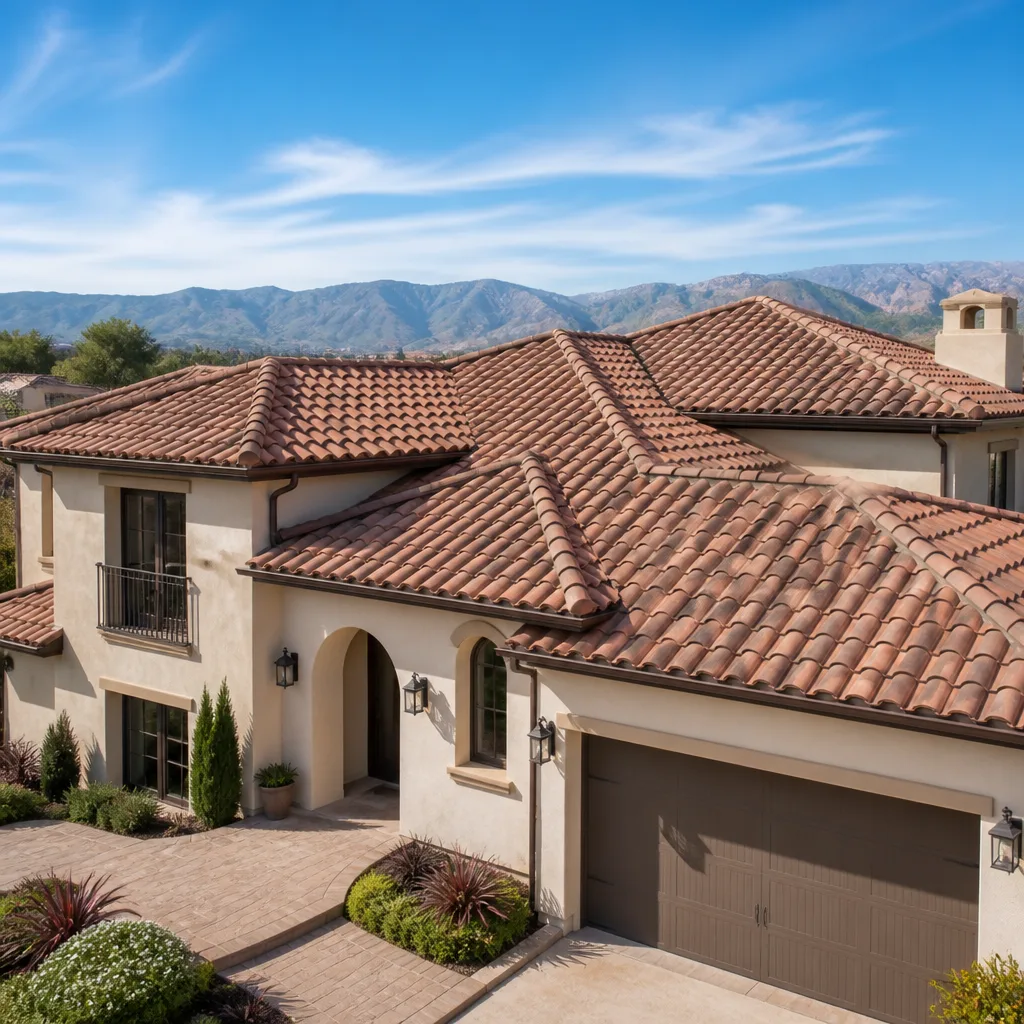 Tile roofing
 GAF
GAF Owens Corning
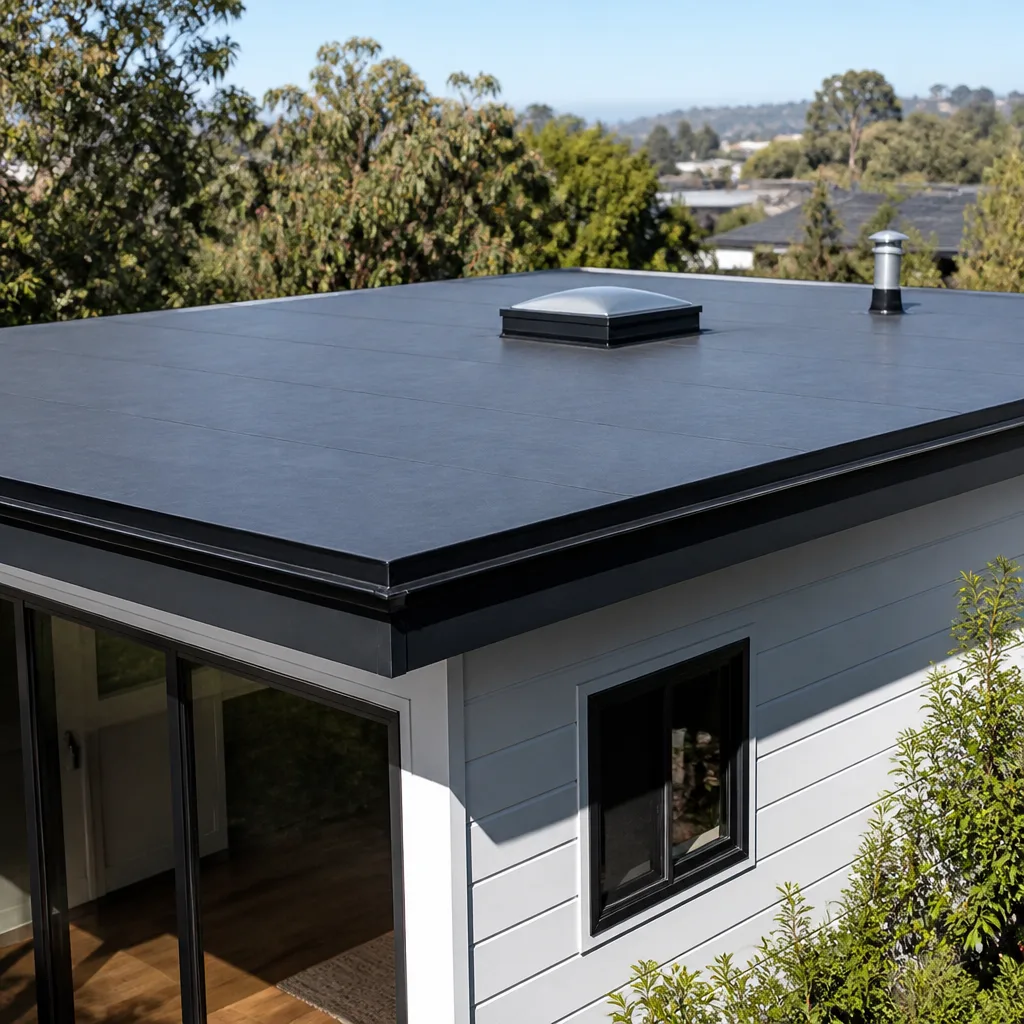 Flat & low-slope
Free roof inspection with deck photos before we talk money - GAF and Owens Corning certified installation
IKO Flashing Replacement: The Fort Lauderdale Owner’s Guide
An IKO flashing replacement in Fort Lauderdale typically runs $400 to $950 installed for a single penetration (pipe boot, chimney, or skylight flashing), and we carry IKO-compatible flashing stock in our trucks so most repairs are done the same visit. Homeowners usually discover flashing has failed during a roof inspection or after a water stain shows up on a ceiling near a pipe, skylight, or chimney chase. The good news is flashing is almost always a repair, not a re-roof: the rest of your IKO shingles may have years left while one failed flashing is what’s letting water in. Call (754) 354-1224 for a written, line-item quote before any work starts.
Flashing is the metal (or synthetic) material that bridges the gaps in your roof: where a pipe pokes through, where a chimney meets the roofline, where a wall intersects a roof deck. IKO shingles are built for Fort Lauderdale’s sun, but flashing is the part that weathers fastest here. Salt air, relentless UV, and the thermal expansion of a hot roof deck under a Florida sun work through flashing seals years before the shingles themselves give up.
Which IKO Models This Applies To
IKO’s flashing requirements are consistent across their two main architectural shingle lines sold in South Florida: IKO Cambridge and IKO Dynasty, along with the discontinued-but-still-on-roofs IKO Marathon line. The flashings themselves are not model-specific: a 3-in-1 pipe boot or a step-flashing kit that matches the shingle’s exposure (typically 5-5/8 inches for IKO architectural shingles) works across these series. But the compatibility gotcha is this: IKO architectural shingles are physically thicker than most 3-tab shingles, and a flashing that was sized for 3-tab will sit wrong at the shingle transition, creating a tiny valley where water can pool after a Fort Lauderdale downpour. We measure the shingle thickness on-site and match the flashing gauge accordingly, rather than grabbing whatever’s closest from the truck.
If you want to identify what you have before we arrive: look for the IKO label inside an open shingle bundle (leftover from install), or the ridged, multi-layer edge of an architectural shingle. A roof we installed after 2000 will have documentation; if you bought the house with an IKO roof, we can usually identify the series in minutes on-site. Whether OEM IKO-branded flashing (which IKO does produce) or a quality aftermarket equivalent, the material choice comes down to whether you want the IKO name stamped on it or a thicker-gauge piece that costs less but does the same job. We stock both and give you the honest price difference in writing.
Styles & brands we work with
Signs Your IKO Flashing Replacement Is Failing
- Ceiling stains that bloom after heavy rain. The staining appears around a pipe, chimney, or skylight, usually slightly away from where the roof penetration actually is; water travels along rafters before it drips. By the time the stain is visible, the flashing has been passing water for weeks or months.
- Dark streaks or mold around a roof penetration. On the roofline, failed flashing leaves a gray or black residue where water is getting under the shingle edges and feeding algae growth.
- Loose or lifting flashing metal. In Fort Lauderdale’s afternoon thermals, a roof deck can move more than half an inch between morning and mid-afternoon. Repeated expansion and contraction eventually pulls old flashing nails loose enough to see a visible gap.
- Granule loss around the flashing. If the shingle immediately around a pipe boot or chimney flashing is balding faster than the rest of the roof, water is being redirected onto that spot and washing the granules off.
- Interior paint blistering near the ceiling. This is what water does when it travels horizontally along drywall: it lifts paint into pimples. It’s the same leak, just further down the path from the flashing.
See the difference
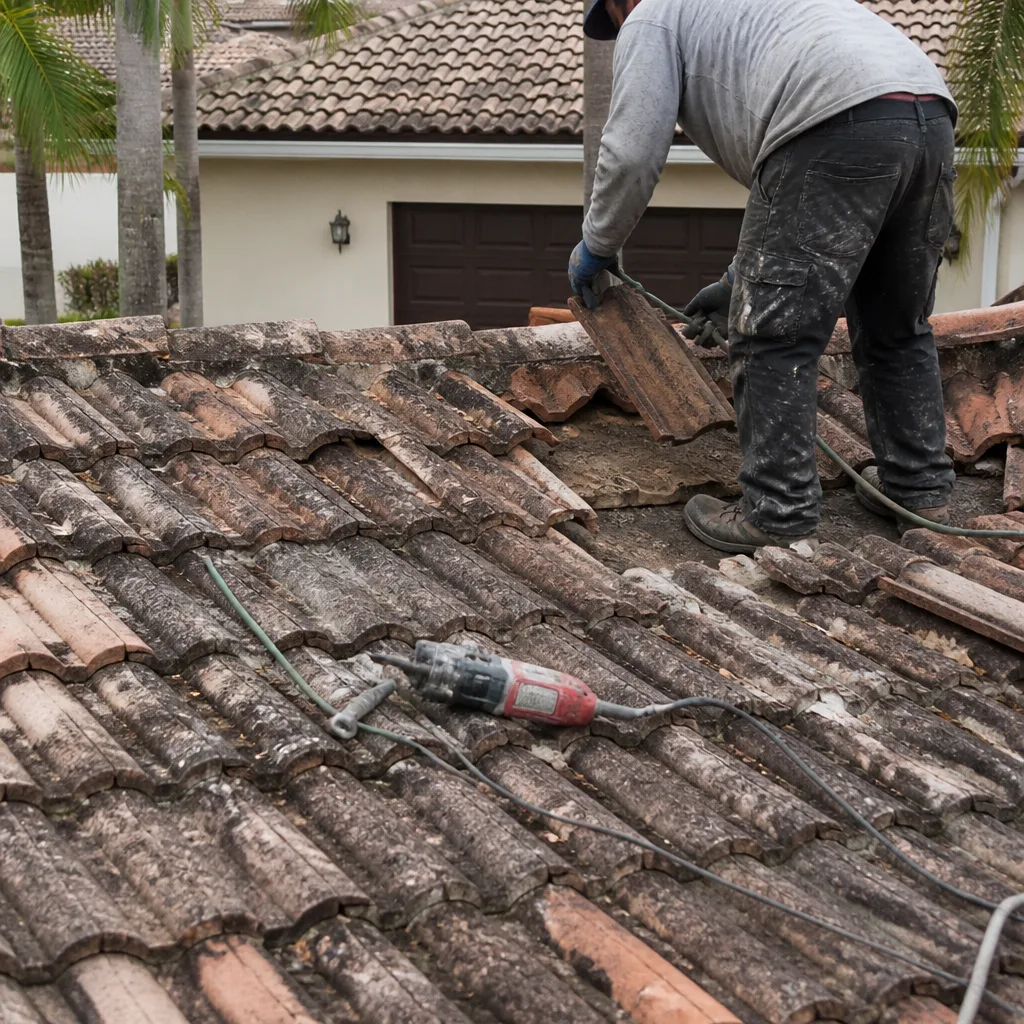 Before
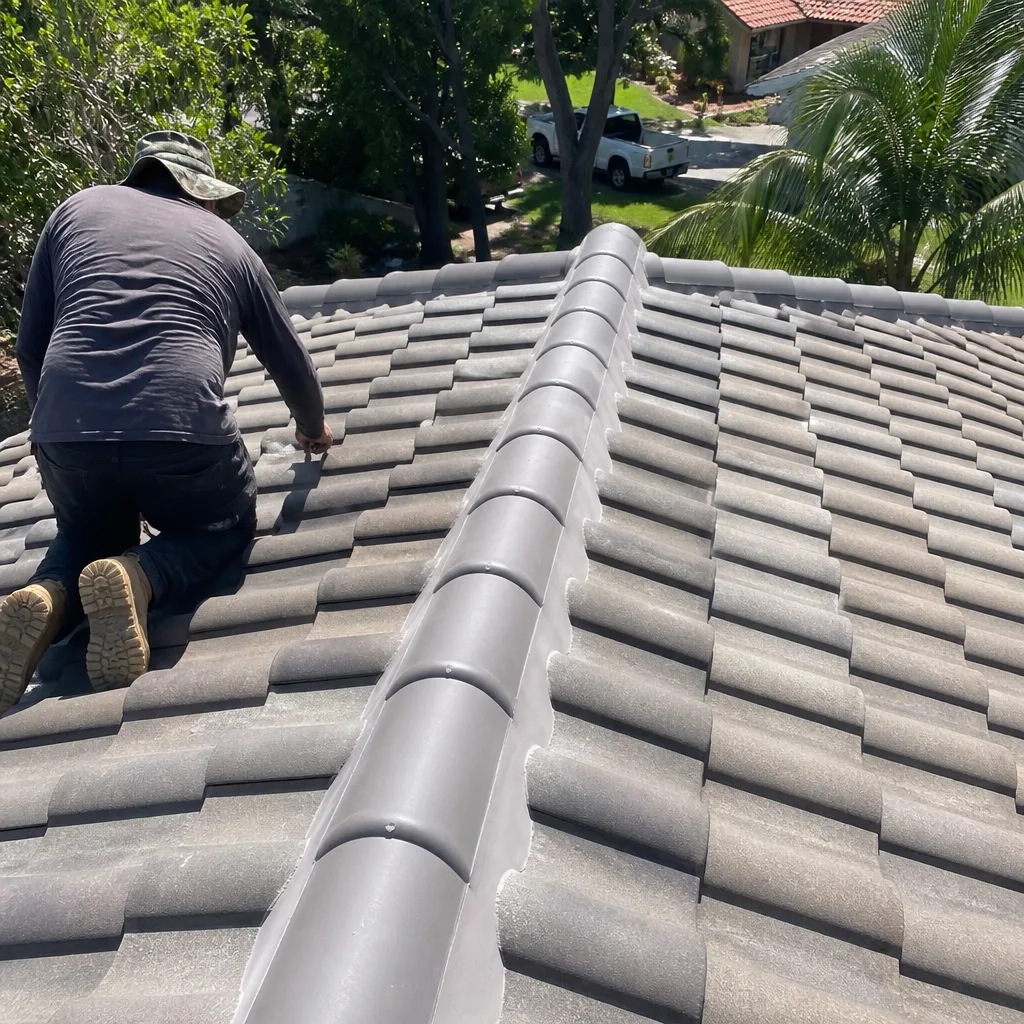 After
After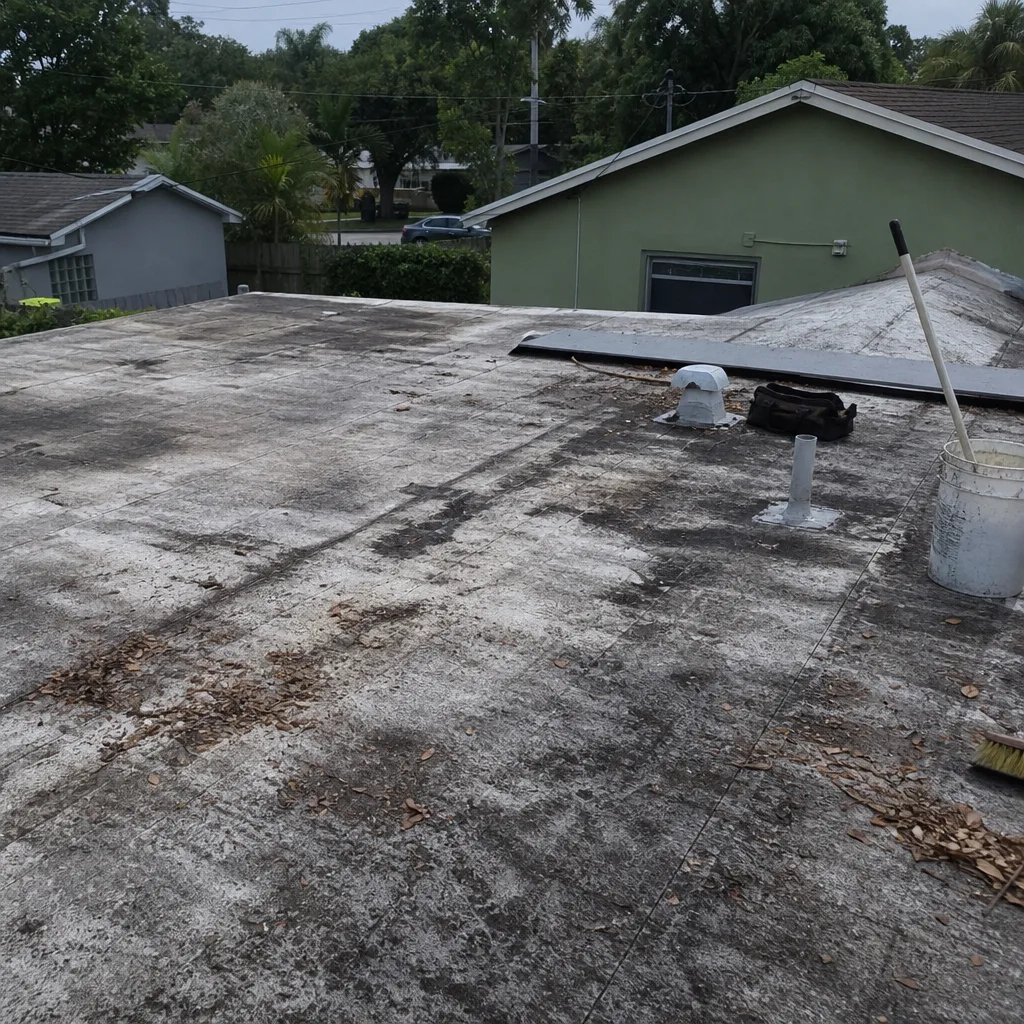 Before
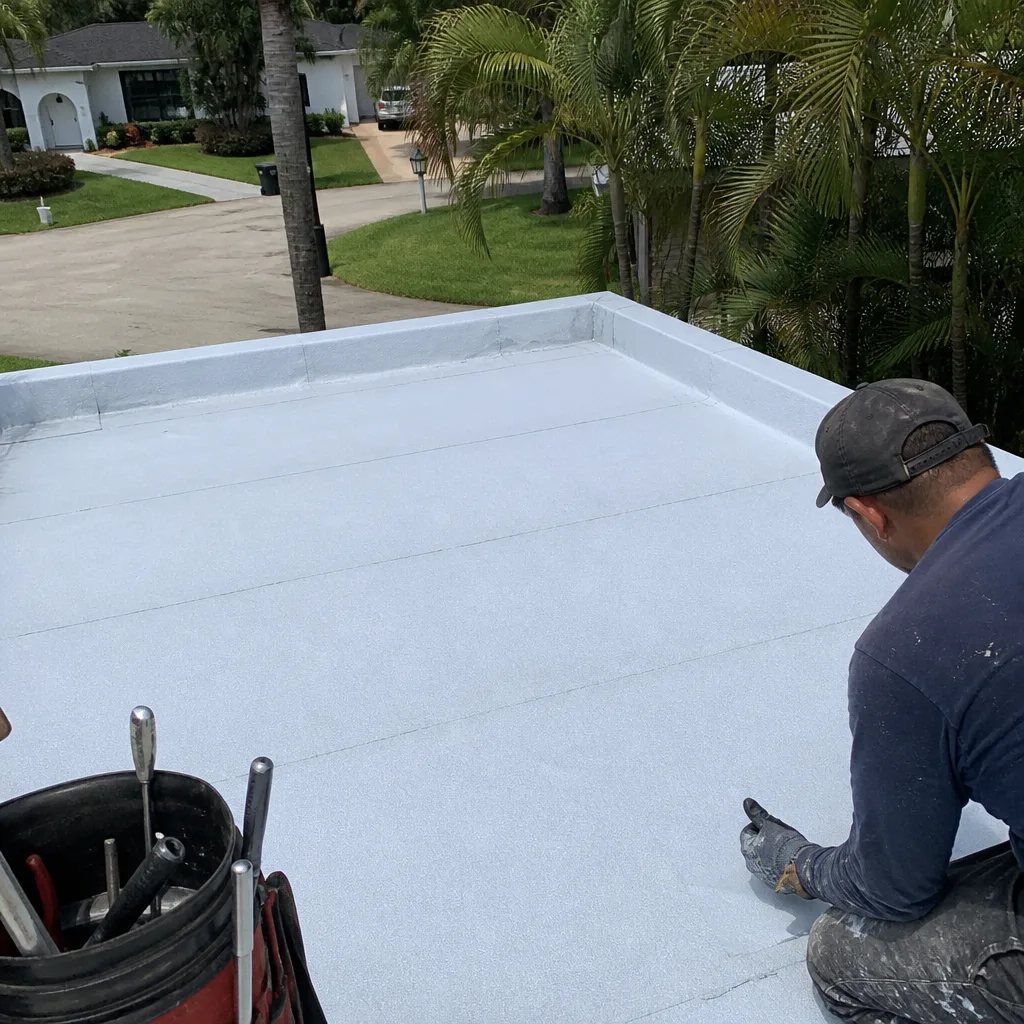 After
After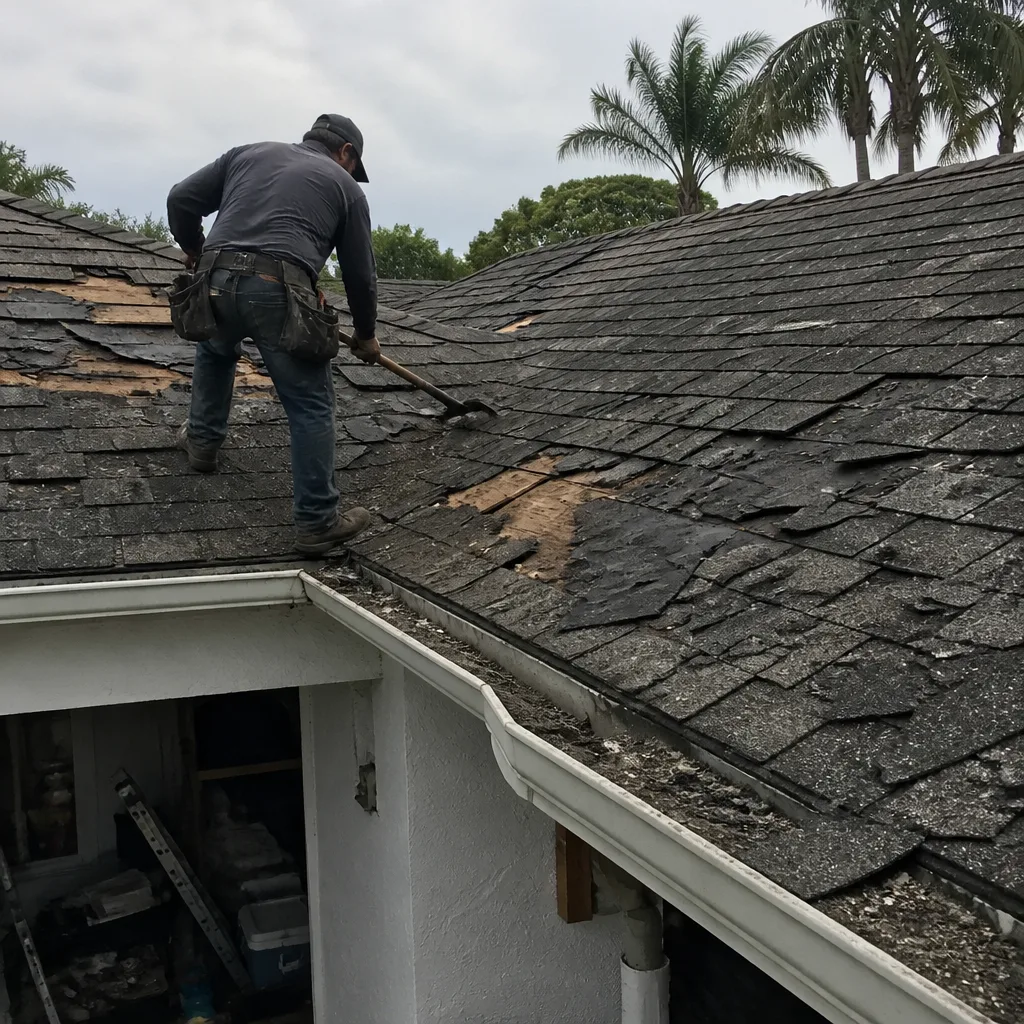 Before
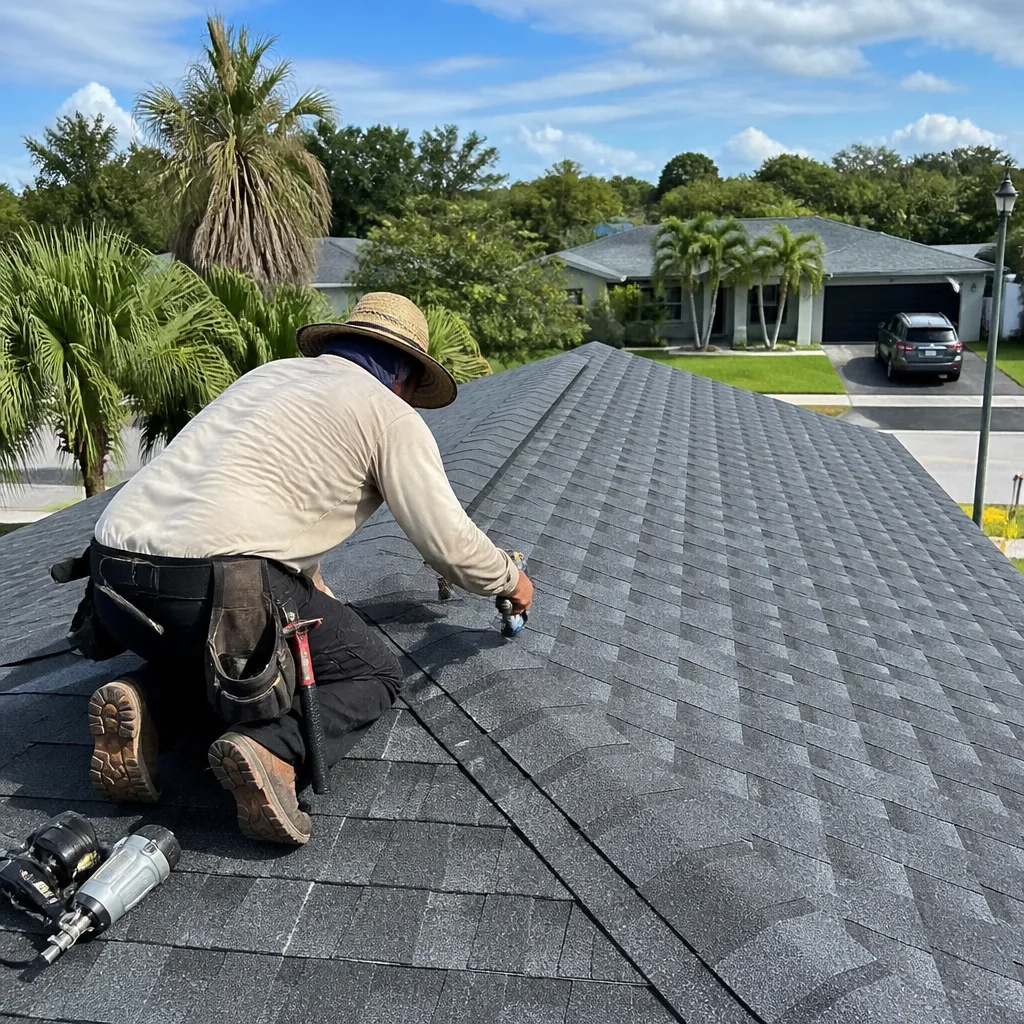 After
AfterReplacement Cost & What’s Included
In Fort Lauderdale, a standard IKO flashing replacement breaks down like this:
- Pipe boot flashing (single): $400 to $600 installed
- Chimney flashing (step + counter flashing, one side): $500 to $800 installed
- Skylight flashing (full perimeter): $600 to $950 installed
- Wall-to-roof step flashing (per linear 10-foot run): $350 to $650 installed
Those ranges include the flashing material, roofing cement or sealant, roof deck inspection underneath the failure, and haul-away of the old piece. What drives the spread: whether the roof deck under the flashing has started to rot and needs a small patch, and how much roof access your particular house gives us (a two-story home off a narrow Fort Lauderdale lot adds ladder and safety time). Every price is written before we start, and every flashing replacement carries our 365-Day Done Right Promise: if it fails within a year, we come back and fix it free. That’s in writing, on paper, with your invoice.
DIY or Call Us?
You can safely check from the ground whether flashing is loose or visibly lifting, and you can look for water stains inside your home. What a homeowner should not do is walk the roof and start peeling flashing that may be holding, barely. A failed flashing under a Fort Lauderdale afternoon sun is often sitting on a roof deck that is hotter than most people expect, and a momentary slip on a 7/12 pitch means more than a bruised ego. We also see a fair number of “repaired” flashings that failed because the last person used roofing tar as the primary seal instead of a correctly installed replacement piece. Tar cracks in six months here. The right fix is a new flashing, properly bedded and mechanically fastened.
If you want a set of honest eyes on it before you commit to anything, call (754) 354-1224. We’ll give you a written price for the replacement and tell you if the rest of your IKO roof is in good shape or if the flashing failure is the first sign of a larger problem. No pressure, just a straight answer from someone who’s looked at a lot of Fort Lauderdale roofs.
FAQs
Twenty to twenty-five years for properly installed flashing, but flashing seals and boots can fail in less than fifteen in Fort Lauderdale because the combination of salt air and year-round UV is harder on sealant than on shingles. If a flashing repair fails within a year of our installation, the 365-Day Done Right Promise means we return and fix it free.
Sometimes a small sealant refresh buys you a season or two, but if water is visibly getting through, patching is a short-term bandage that usually costs more than a proper replacement once the water damage sets in. We’ll tell you if a repair makes sense, and put that recommendation in writing either way. Call (754) 354-1224 for a straight answer without the sales pressure.
Most single-flashing replacements are done in under two hours if the roof deck is dry and the extraction is clean. If we find deck rot, the job adds the time to cut and patch a small section of plywood, usually another hour. Chimney and full-skylight flashing replacements take longer due to the number of seal planes.
Yes. We stock IKO-compatible flashing in the gauges most common in Broward County, along with flashing matched for GAF, Owens Corning, and CertainTeed roofs. If your specific piece is a non-standard size, we source it same-day or next-day through our local suppliers, and we don’t start until the right part is on-site.
Written by Grant Whitlock, Owner, Mercer Roofing Co Fort Lauderdale at Mercer Roofing Co Fort Lauderdale, serving Fort Lauderdale and nearby areas.