
Last updated October 17, 2026
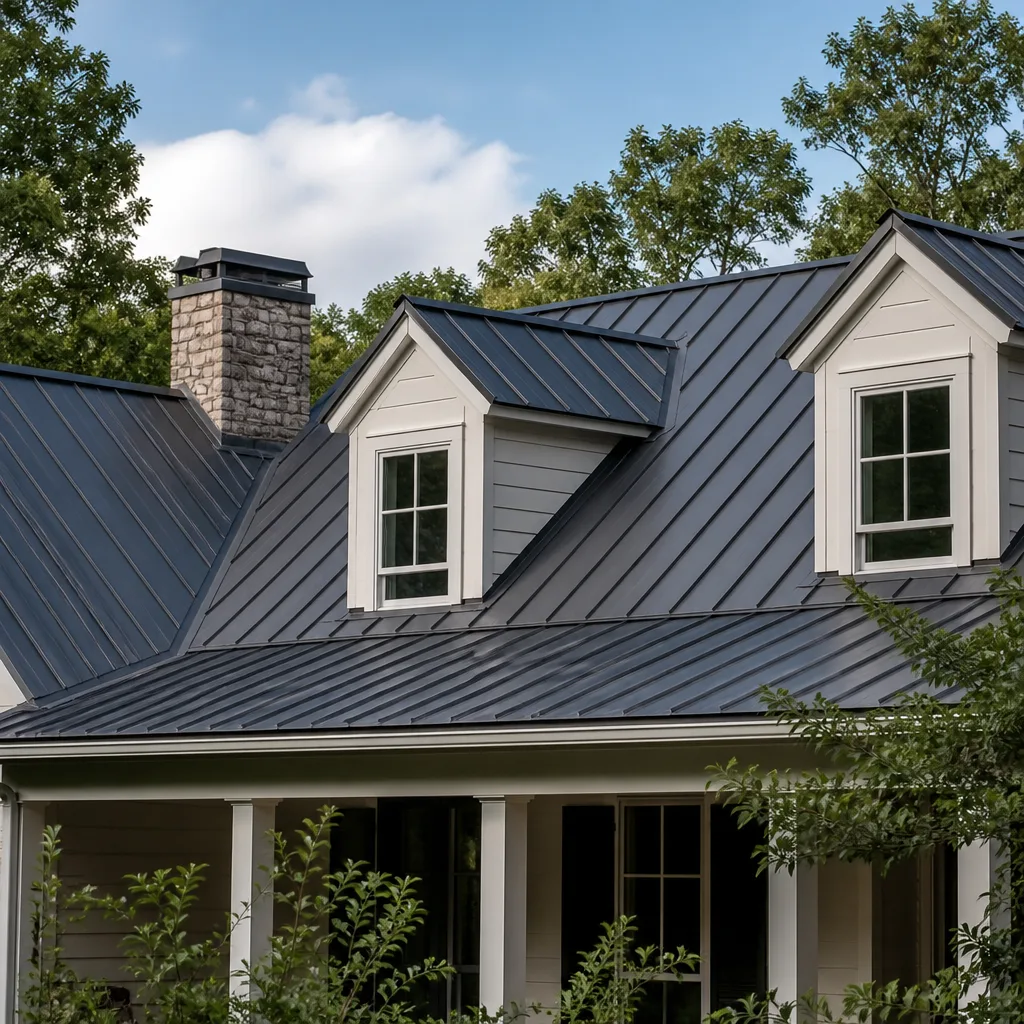 Metal roofing
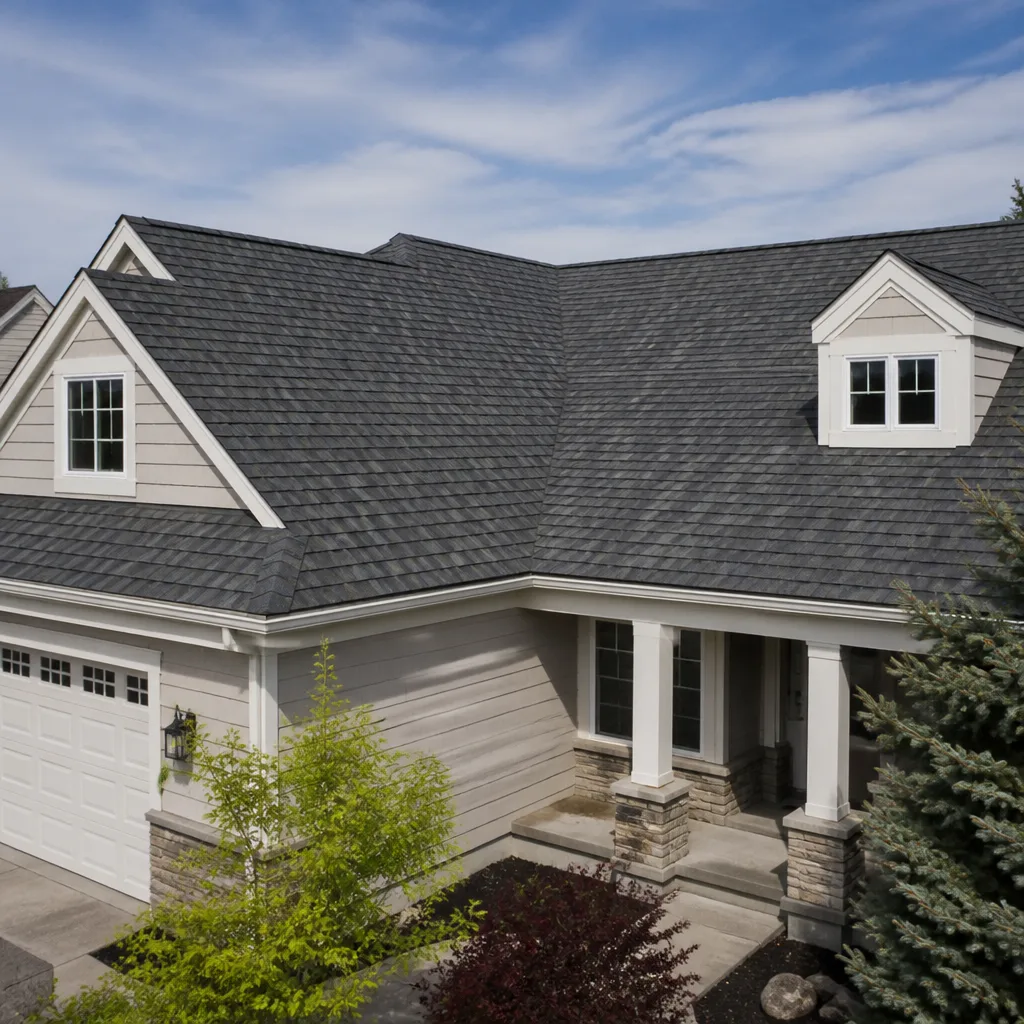 Architectural shingles
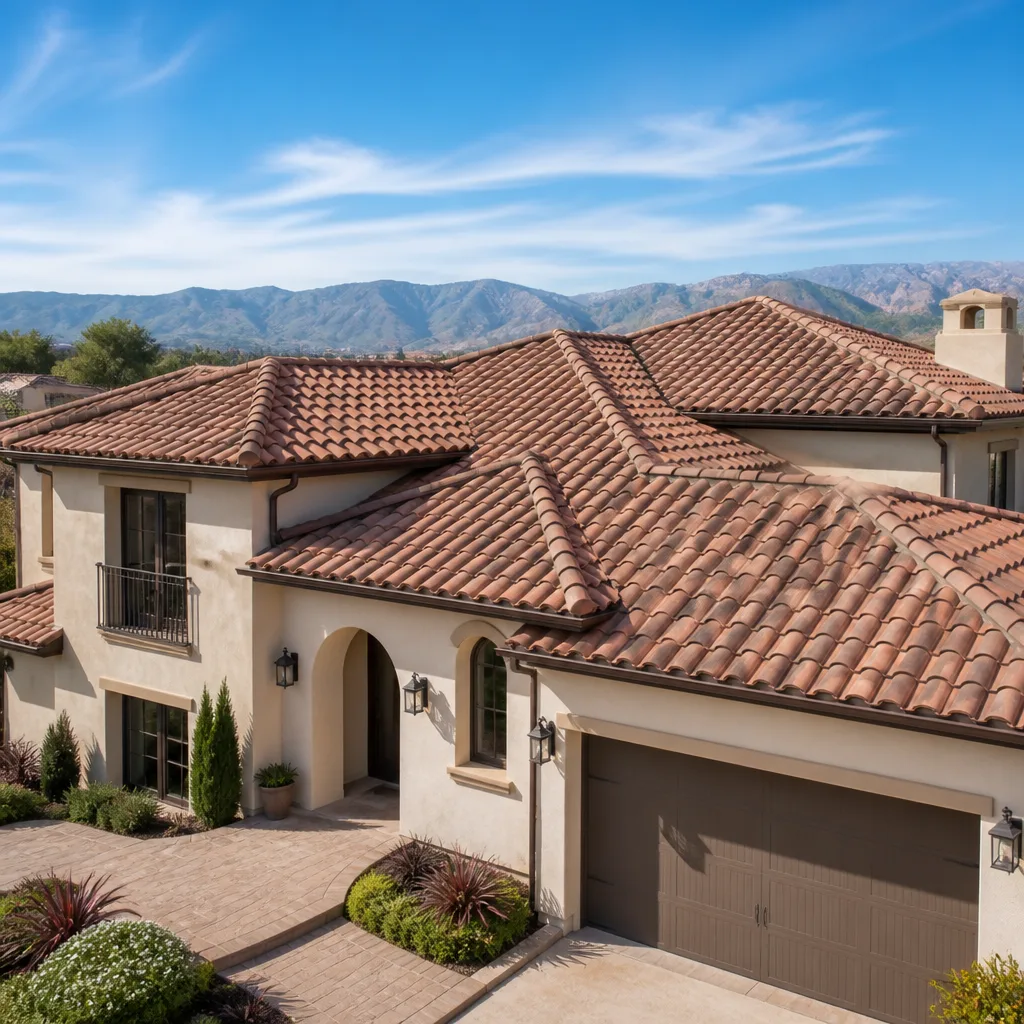 Tile roofing
 GAF
GAF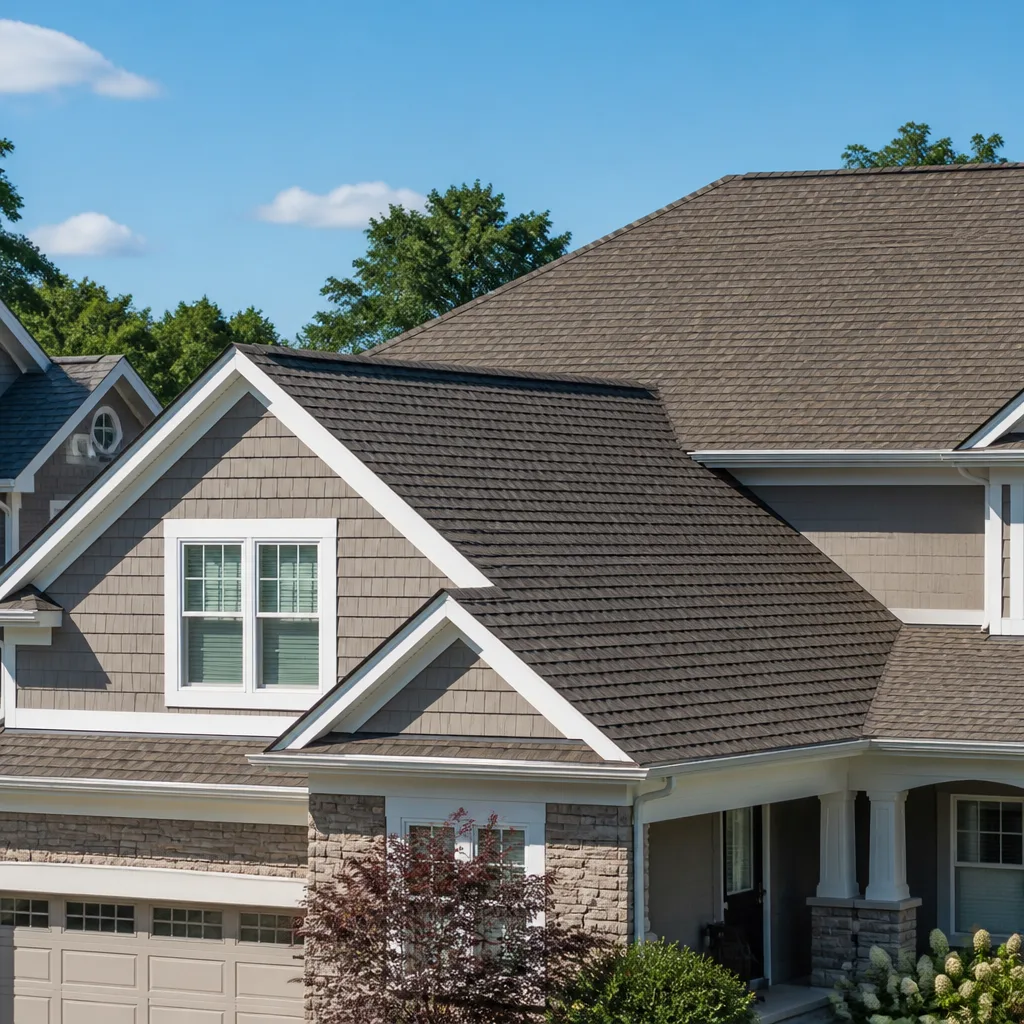 Owens Corning
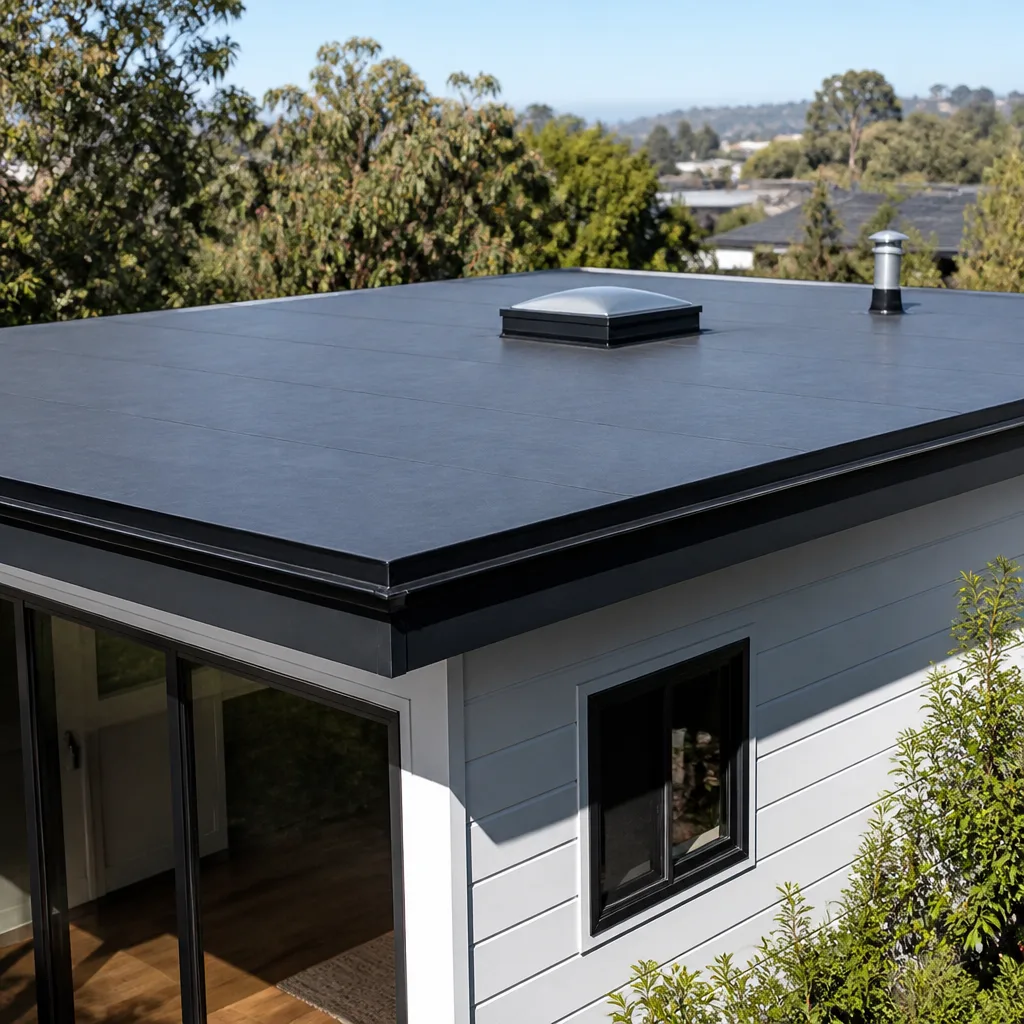 Flat & low-slope
Free roof inspection with deck photos before we talk money - GAF and Owens Corning certified installation
DIY vs Professional Roofing: The Fort Lauderdale Homeowner’s Decision Guide
Here’s a number that surprises most Fort Lauderdale homeowners: replacing more than 25% of your roof surface without a permit isn’t just a code violation. It’s a documented gap in your home’s permit history that can surface years later during a 4-point insurance inspection and trigger a policy non-renewal. This guide walks through the real cost difference between DIY and professional roofing in Fort Lauderdale, which tasks you can legally handle yourself, and how that Saturday-morning roof project could quietly become a five-figure insurance problem.
Quick Answer
For most Fort Lauderdale homeowners, professional roofing is the financially safer choice, even when the DIY quote looks cheaper up front. That’s because Broward County’s High Velocity Hurricane Zone (HVHZ) permit requirements, Citizens Insurance inspection standards, and manufacturer warranty clauses all stack against unpermitted homeowner work. Small maintenance tasks are fine to DIY. Anything involving shingles, underlayment, flashing, or decking should go through a licensed contractor with a permit.
Styles & brands we work with
Table of Contents
- What DIY Roofing Actually Costs in Fort Lauderdale
- Broward County Permit Thresholds: The 25% Rule Explained
- 5 Roofing Tasks You Can Legally and Safely DIY
- How DIY Work Voids Manufacturer Warranties
- The Insurance Math: 4-Point Inspections and Citizens Eligibility
- How to Do Partial Work Yourself Without Voiding Guarantees
- What to Look For in a Fort Lauderdale Roofing Contractor
- Common Mistakes to Avoid
What DIY Roofing Actually Costs in Fort Lauderdale
The sticker price of DIY roofing looks attractive at first glance. A bundle of architectural shingles runs $35 to $55 at most South Florida building supply stores. Underlayment adds another $40 to $70 per roll. Nails, flashing, sealant, and a nail gun rental might push your total materials for a small repair to $200 or $300. A contractor would quote $600 to $1,200 for that same repair depending on scope and accessibility, so the DIY path appears to save you $400 to $900.
But that math ignores what Fort Lauderdale specifically adds to the equation. Broward County requires specific HVHZ-rated materials that are not always stocked at big-box stores. You’ll pay more for code-compliant peel-and-stick underlayment and Miami-Dade or Broward County approved shingles, which can narrow the savings gap significantly. We regularly see homeowners at Mercer Roofing Co Fort Lauderdale who bought standard materials first, then discovered they failed the HVHZ product approval list.
The hidden costs compound quickly:
- Tool rental and safety gear: A proper harness, roof brackets, and a pneumatic nailer rental run $150 to $300 per day.
- Material waste from mistakes: First-time roofers commonly waste 15 to 25% of shingles through improper cuts and nail placement.
- Permit fees: If you do pull a permit as an owner-builder, Broward County fees typically run $200 to $500 depending on scope.
- Repairing mistakes: We see DIY jobs that need professional correction within 18 months, which erases any upfront savings entirely.
In our experience at Mercer Roofing, the real cost difference in Fort Lauderdale between DIY and professional work is closer to 15 to 30% on small repairs, not 60 to 70%. And that smaller gap doesn’t account for the insurance and warranty costs covered later in this guide.
Broward County Permit Thresholds: The 25% Rule Explained
Broward County’s building code requires a permit when roofing work covers more than 25% of the roof area within a 12-month period. That sounds generous until you do the math on a typical Fort Lauderdale home. A 1,800-square-foot single-story house often has a roof area of 2,200 to 2,700 square feet because of slope and overhangs. Twenty-five percent of that is 550 to 675 square feet. A 10-by-10-foot repair area is 100 square feet. A ridge cap replacement along a 40-foot roofline is roughly 80 to 120 square feet depending on cap width.
Translated to real terms: replacing shingles on one full slope of a gable roof, redoing a large valley, or repairing storm damage across multiple sections of a typical Fort Lauderdale home will put you past the 25% threshold. Even if you keep each individual repair under 25%, the code measures cumulative area within a 12-month window, meaning multiple small DIY repairs can collectively become a permit-required project.
What does “over 25%” actually look like?
| Roof Area on a Typical Fort Lauderdale Home | 25% Threshold | What That Equals |
|---|---|---|
| 1,800 sq ft home, low slope | ~550 sq ft | One full gable slope or two large valleys |
| 2,200 sq ft home, steep pitch | ~675 sq ft | Half the total roof surface |
| 1,500 sq ft home, flat roof | ~375 sq ft | A 15×25-foot section |
Permit history matters in Fort Lauderdale more than in almost any other U.S. market. When a buyer purchases your home, their lender and insurer will request a 4-point inspection, which explicitly checks whether roof work was permitted. An unpermitted repair shows up as a “deferred maintenance” or “non-permitted work” notation, which can delay closing, reduce your sale price, or trigger insurer non-renewal. The permit isn’t just about doing the work right. It’s about proving the work happened, legally, to whoever owns or insures the house next.
5 Roofing Tasks You Can Legally and Safely DIY
We’re not here to tell you every roof task requires a contractor. Some maintenance is genuinely safe for a Fort Lauderdale homeowner to handle, and following a Roof Repair Maintenance Checklist for Fort Lauderdale Homeowners can extend your roof’s life and catch small problems early. Here are the five we recommend, with exactly what each involves.
- Gutter cleaning and downspout flushing (quarterly): Palm fronds, seed pods, and South Florida’s leaf litter clog gutters fast. You’ll need a ladder, gloves, a garden hose, and about 45 minutes. Stay off the roof itself. Work from the ladder and flush each downspout with the hose on full pressure. Clear gutters prevent water from backing up under the roof edge flashing, which is one of the most common leak sources we repair in Fort Lauderdale.
- Attic vent inspection (twice a year): Go into your attic on a sunny morning and look for daylight around the ridge and soffit vents. If you see light, you should see ventilation. If you see dark corners, blocked vents, or moisture stains on the underside of the roof decking, you’ve found a problem early. This inspection requires no tools and no roof access.
- Granule sweeping from gutters (monthly during rainy season): When you see sand-like granules accumulating in your gutters, it’s a sign your shingles are shedding their protective coating. Sweeping them out and noting the volume helps you track whether the shedding is normal or accelerating. A sudden heavy granule load can be an early warning of shingle failure.
- Caulk touch-up on exposed fasteners (annually): Walk around your home with a tube of exterior-grade polyurethane caulk and a caulk gun. Look for exposed nail heads on any metal flashing, vent pipes, or stack collars visible from the ground or a safe ladder position. A small bead of caulk over a nail head seals it against South Florida’s driving rain. This is a ten-minute fix that prevents rust streaks and slow leaks.
- Minor flashing sealant (visually inspect and reseal small gaps): If you see a small gap where flashing meets a wall or chimney, and the flashing itself is solid, you can apply a roof-grade sealant to close the gap. We recommend using a sealant that is specifically rated for Florida’s UV exposure. If the flashing is bent, corroded, or pulling away from the structure, stop and call a professional. That flashing needs mechanical repair, not sealant.
These five tasks keep you on the maintenance side of the line. None of them involve removing or fastening roofing material, none require a permit, and none void a manufacturer warranty.
How DIY Work Voids Manufacturer Warranties
Most homeowners don’t read the fine print on a shingle warranty until they need it. When they do, they find a clause that changes the DIY math entirely. Major manufacturers including GAF, CertainTeed, Owens Corning, and IKO state in their written warranties that installation must be performed by a licensed contractor for the material warranty to remain valid. The warranty covers manufacturing defects, but a manufacturer cannot verify that a defect caused the failure if the installation was not performed to their published specifications by a qualified installer.
What does that cost you in real dollars if the material fails? Let’s use a real example. You buy 30 squares of CertainTeed Landmark shingles for a DIY reroof, material cost around $4,500. Two years later, visible blistering appears on the south-facing slope. If a Mercer Roofing technician had installed those shingles, you’d file a warranty claim and recover the material value, typically prorated over the warranty period. But because you installed them yourself, CertainTeed has no installation record. Your claim gets denied. A replacement for that slope costs $2,500 to $4,000 out of your own pocket.
The warranty issue extends beyond shingles. Underlayment manufacturers like GAF’s Deck-Armor and Owens Corning’s ProArmor publish installation specifications that require specific fastener patterns, overlap distances, and substrate preparation. A homeowner might do a flawless visual job and still install the underlayment in a way that fails the spec in a way they can’t see. The warranty is only as good as the installation record behind it.
One more layer: some extended warranties offered through contractor certification programs, including GAF Master Elite and CertainTeed Select ShingleMaster, are only available when a certified contractor performs the installation. These programs can extend coverage and add installation workmanship components that a homeowner installation can never access.
The Insurance Math: 4-Point Inspections and Citizens Eligibility
Florida’s property insurance market operates differently than the rest of the country, and Fort Lauderdale homeowners feel it more than most. Citizens Property Insurance, which insures more Florida homes than any other carrier, requires a passing 4-point inspection for new policies and many renewals. That inspection covers four systems: roof, electrical, plumbing, and HVAC. The roof section is weighted heavily, and the inspector specifically reviews whether roof work was permitted and completed by a licensed contractor.
Here’s the difference between a permitted professional repair and an unpermitted DIY repair on a 4-point inspection:
- Permitted professional repair: The inspection report shows a verified permit, a licensed contractor’s name and license number, and a passing roof condition rating. The carrier accepts the risk. Policy issued, renewal clean.
- Unpermitted DIY repair: The inspector notes evidence of new roofing material with no matching permit. The report flags “unpermitted work” or “unverified installation.” The carrier either declines coverage, issues a non-renewal, or conditions coverage on replacing the affected area with permitted professional work within 30 to 60 days.
That conditional replacement is the expensive outcome. Not only do you pay for a professional repair, but you also carry the gap in coverage during the repair window. And if a storm damages that unpermitted area before you replace it, your claim can be denied outright. The wind mitigation credits that Florida homeowners rely on to reduce premiums also require documentation that roof construction and repairs meet code. DIY work has no documentation path to a wind mitigation credit.
We’ve talked to Fort Lauderdale homeowners who saved $600 on a DIY repair and then faced a $4,000 replacement bill plus a coverage gap when their insurer flagged the work. The math is clear before you start the first cut.
How to Do Partial Work Yourself Without Voiding Guarantees
You might want to handle parts of your roof project yourself and hire a contractor for the rest. That’s a reasonable approach if you structure it correctly. The key is defining the scope split clearly enough that your contractor’s workmanship guarantee covers their work and your DIY work can’t be blamed for their failure. Here’s how to structure that conversation.
- Define scope in writing before work starts: Ask the contractor to list their scope in the contract with specific reference to roof areas, materials, and access points. If they’re replacing the south slope and you’re re-caulking the vent pipes on the north slope, both of those should be written down with clear boundaries. Vague scope language is how disputes start.
- Ask which warranty clauses apply to partial DIY: A written workmanship guarantee should state how long it covers the contractor’s work and under what conditions that coverage continues. Most contractors, including Mercer Roofing, will honor a workmanship guarantee on their scope as long as your DIY work on a separate area doesn’t interfere with it structurally. Get that in writing.
- Keep your DIY work outside the contractor’s work area: This is the most important rule. If a contractor is replacing a section of your roof, do not climb onto that section and apply sealant, nails, or any material while the job is underway or after. If something fails, every contractor will reasonably point to homeowner modification. Keep your scope physically separated by defined roof boundaries.
- Show the contractor your intended DIY work: Before you touch anything, walk the contractor through what you plan to do yourself. An experienced roofer will tell you if your DIY plan is actually going to cause problems, whether that means trapping water, using the wrong sealant, or working on an area they need to access. This conversation takes ten minutes and can save you a failed inspection.
- Document your DIY work with photos and dates: If you re-caulk fasteners or clean gutters, take before and after photos with timestamps. If an insurance question later arises, you have a record of what you did and when. This is the same documentation discipline professionals use on permitted jobs.
At Mercer Roofing Co Fort Lauderdale, we’re happy to write scope splits like this. A clearly defined contract protects both parties, and we’d rather have homeowners involved in safe maintenance than discourage all hands-on work.
What to Look For in a Fort Lauderdale Roofing Contractor
If the math in this guide pushes you toward professional work, the next question is who you hire. Fort Lauderdale has hundreds of roofing contractors, and South Florida’s storm-driven market attracts transient operators who appear after a hurricane and vanish after a season. Here’s what separates a contractor you can trust from one you should avoid.
Written pricing before work starts: Every reputable Fort Lauderdale roofer should give you a written price before any work begins. No verbal estimates, no “we’ll see what we find once we open it up” surprises. A written line-item price with no change orders unless you approve them in writing is the minimum standard. Mercer Roofing includes this on every job as a matter of policy, not as an add-on.
Written guarantees with a real term: “We stand behind our work” is not a guarantee. A real guarantee states the term, the coverage, and the remedy. Our 365-Day Done Right Promise is a written commitment: if the work is not right within a year, we make it right, and every repair includes a written guarantee and a free second visit if the repair fails. That’s the level of specificity you should expect from any contractor.
Identity verification at the door: You’re letting a stranger onto and into your home. In Fort Lauderdale, where absentee owners and single-occupant households are common, knowing exactly who is arriving matters. Every Mercer Roofing technician is background-checked under the Threshold Verified standard, arrives in a clean uniform with a photo ID badge, and we send the technician’s name and photo to you before they arrive. If a contractor can’t tell you who will be at your home and prove it at the door, that’s a red flag.
HVHZ code knowledge: A Fort Lauderdale roofer should be able to discuss Broward County product approvals, nailing patterns, and wind uplift requirements without pausing to Google. Ask any bidder what underlayment they use for an HVHZ reroof and why. The answer tells you instantly whether they’re local roofing professionals or a generalist crew passing through.
Brand relationships that match your goals: If you want a GAF, CertainTeed, Owens Corning, or IKO system, work with a contractor who installs those brands regularly and can document their installation credentials. Manufacturer warranties matter, and so does the installation record that backs them up.
Common Mistakes to Avoid
- Assuming the 25% rule doesn’t apply to small repairs over time: The threshold is cumulative within 12 months. Three separate 10% repairs in one year on a Fort Lauderdale home can collectively exceed 25% and become a permit-required project with all the associated liabilities.
- Using big-box-store shingles on a Broward County home: HVHZ product approvals are specific. Buying materials that aren’t on the approved list means your work fails inspection if you pulled a permit, and fails insurance review if you didn’t.
- Skipping the 4-point inspection conversation with your insurer before doing DIY work: Call your agent before your DIY project, not after. Find out exactly what your carrier requires for the roof to pass a 4-point inspection, and follow that standard or don’t do the work.
- Assuming “I’ll just fix it later if it leaks” is a safe plan: By the time a DIY repair leaks visibly inside your Fort Lauderdale home, water has likely been migrating through the decking for weeks or months. The repair cost multiplies, and your insurance claim can be denied for deferred maintenance.
- Letting an unverified stranger handle your roof: A roofing job requires someone on your property, around your family, with access to your home’s structure. Verify credentials, check licenses, and know who is at your door. No price difference is worth the uncertainty.
- Paying a deposit without a written contract that defines scope and guarantee terms: In Florida, unlicensed contractors and fly-by-night operators collect deposits and disappear. A written contract with defined scope, price, timeline, and guarantee is your only protection.
- Doing partial DIY work inside a contractor’s work area: The moment you modify a contractor’s newly installed area, you own the outcome of that area. Keep your DIY scope physically separate or wait until the guarantee period ends.
See the difference
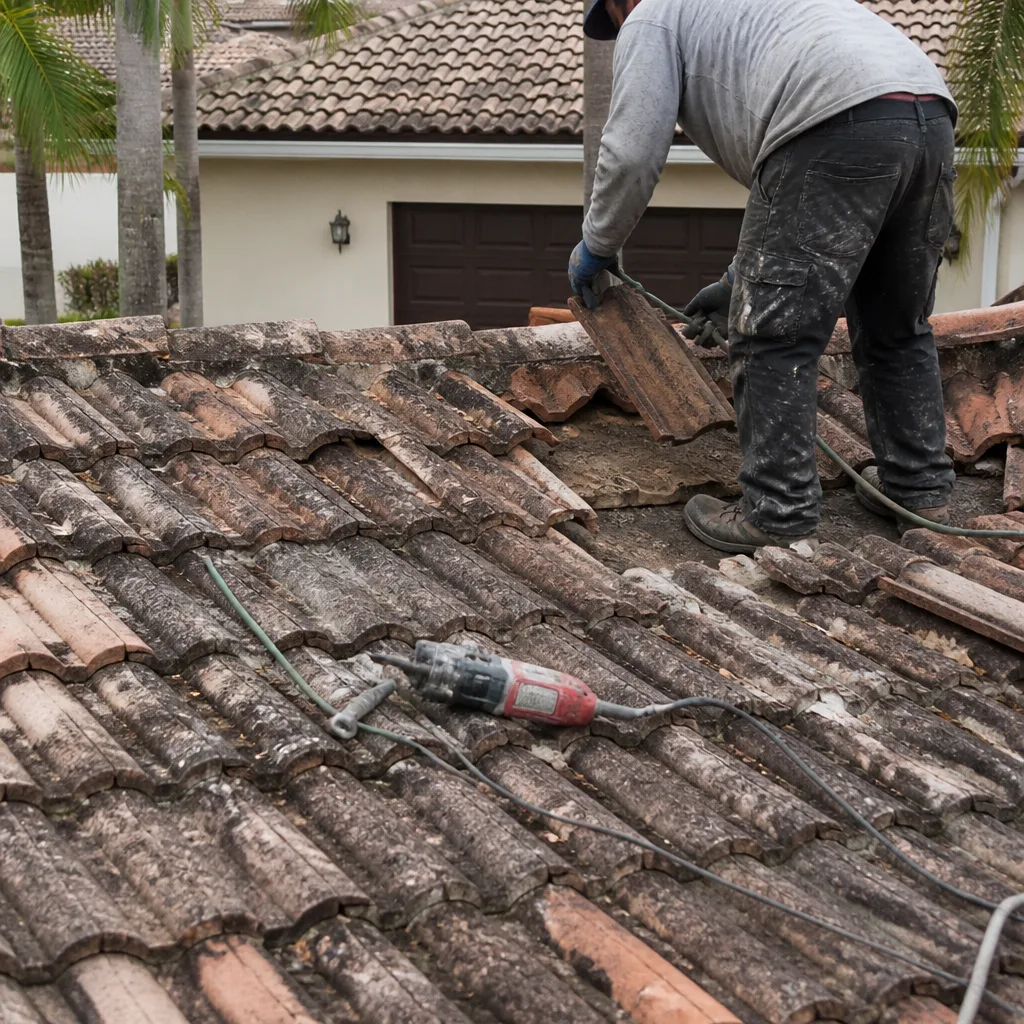 Before
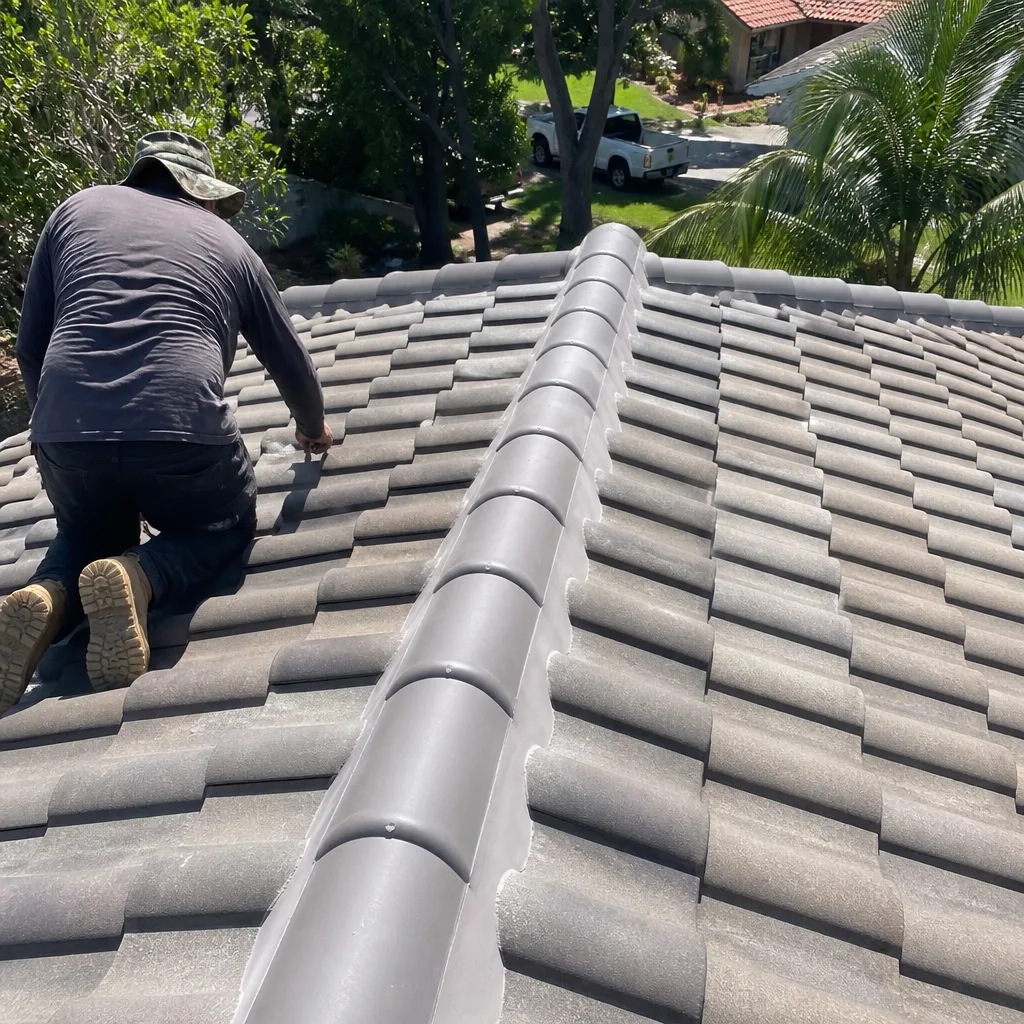 After
After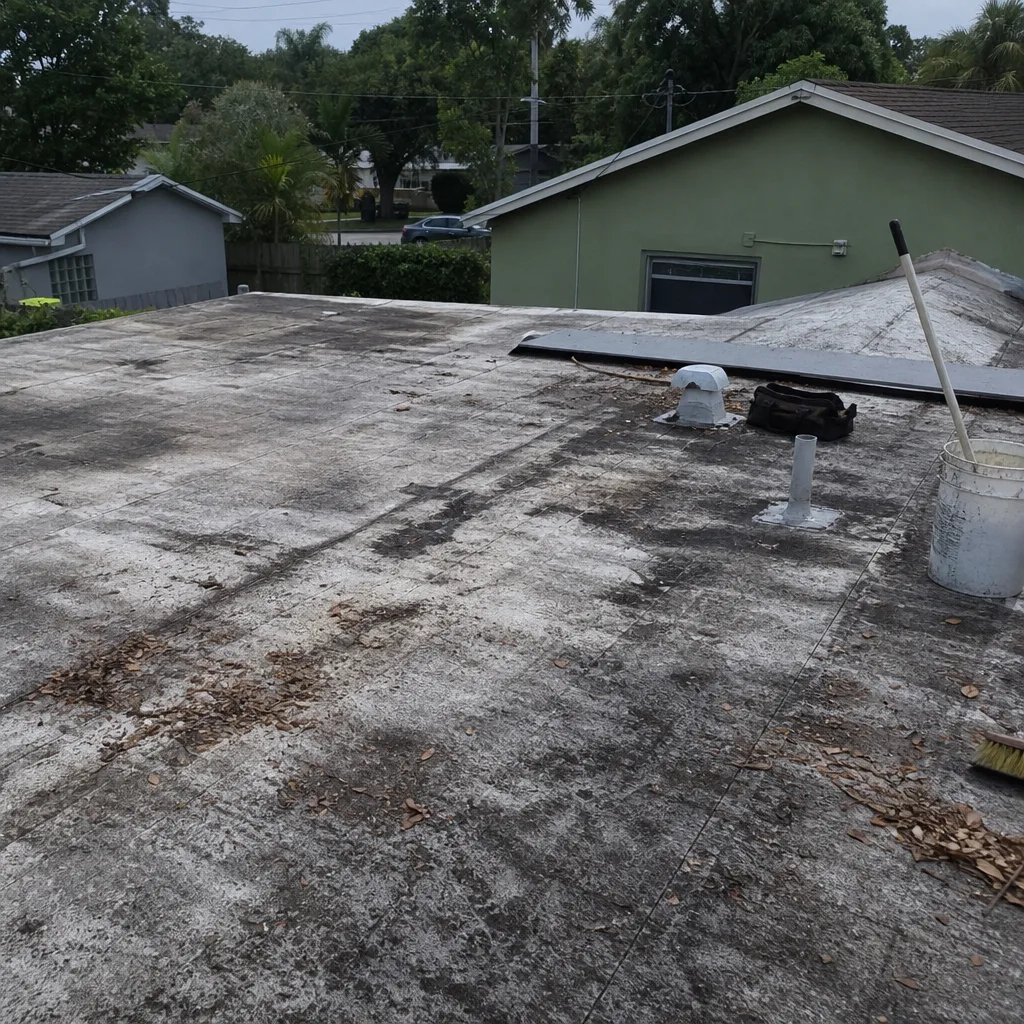 Before
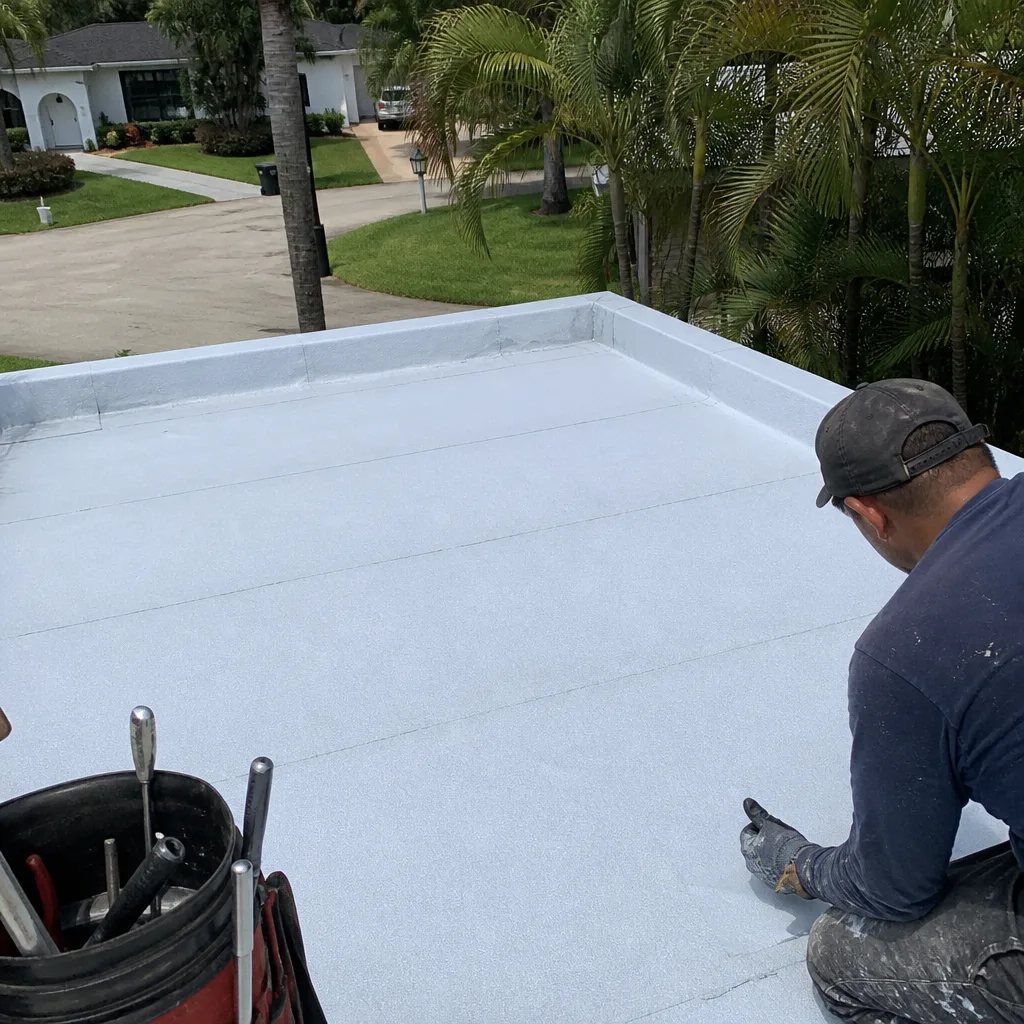 After
After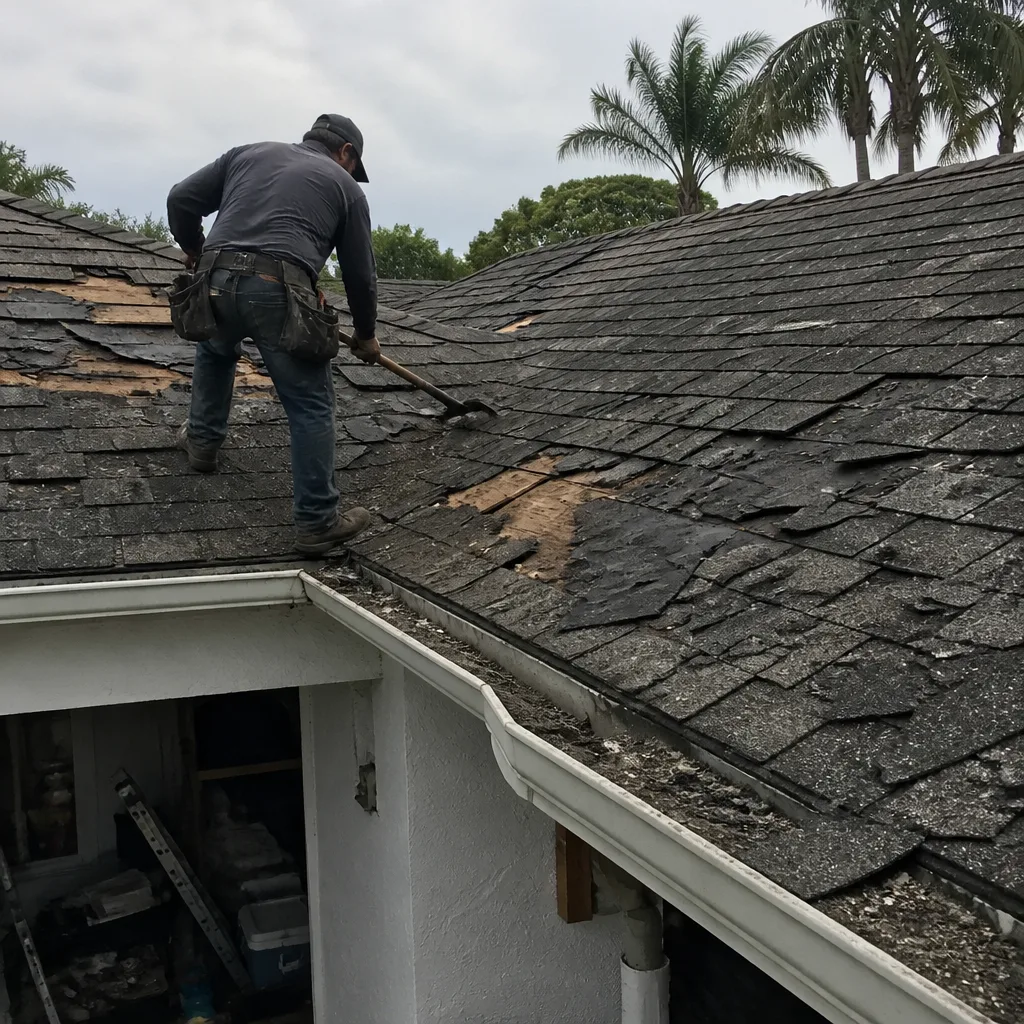 Before
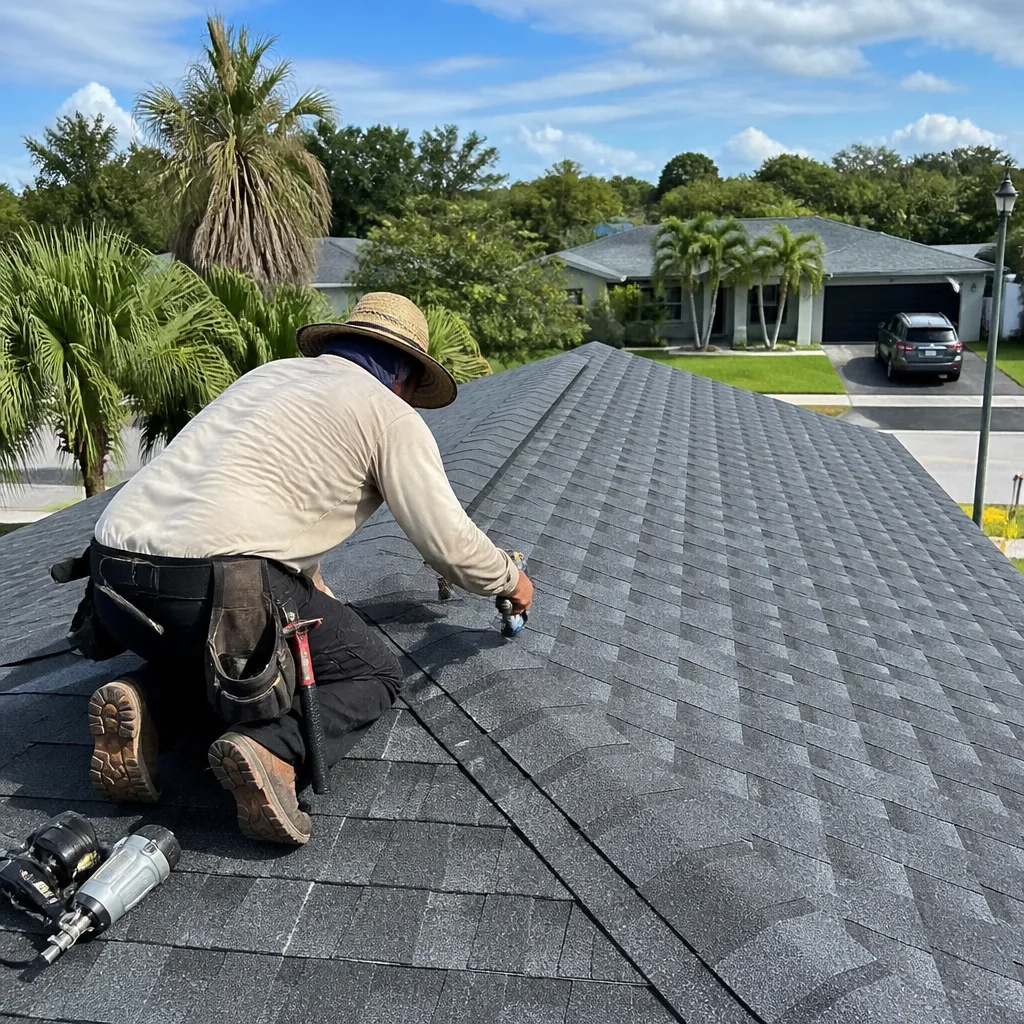 After
AfterWhen to Call a Professional
Call a roofing professional for any of these scenarios: shingle replacement beyond a few isolated shingles, any work involving underlayment or decking, flashing replacement rather than sealing, any leak you can see inside the home, any storm damage claim, any project that may exceed the 25% cumulative threshold, any work you want covered by a manufacturer warranty, and any situation where you feel unsure about roof access or safety. If you’re uncertain whether your project crosses the line, a 15-minute conversation with a licensed Fort Lauderdale roofer costs nothing and clarifies the path. Mercer Roofing Co Fort Lauderdale offers free estimates throughout Fort Lauderdale, with written pricing before any work starts. Call (754) 354-1224 to schedule yours.
Frequently Asked Questions
A typical Fort Lauderdale roof repair costs between $400 and $1,500, with small sealant and flashing fixes on the low end and shingle replacement or valley work on the higher end. Your exact price depends on scope, roof accessibility, and material requirements under Broward County’s HVHZ code. Call (754) 354-1224 for a written estimate specific to your home.
Yes, if the total area you replace stays under 25% of your roof area within 12 months and you do not touch the underlayment or decking. Replacing a few isolated shingles is generally legal homeowner work. But remember that even a legal DIY shingle repair voids the manufacturer’s material warranty on those shingles, since the warranty requires licensed-contractor installation.
If you complete unpermitted roofing work in Broward County, that gap in permit history can surface during a 4-point inspection and trigger a policy non-renewal from insurers including Citizens. It can also delay a home sale, reduce your sale price, and in the worst case, give your insurer grounds to deny a claim for damage connected to the unpermitted area.
Generally no. Florida insurers typically classify damage resulting from improper homeowner maintenance or unpermitted work as an excluded maintenance issue, not a covered peril. If a DIY repair fails and water damages your ceiling, walls, or belongings, your claim can be denied and the repairs become entirely your financial responsibility.
A professional roof repair in Fort Lauderdale should last your roof’s remaining service life if the repair is correctly matched to the existing roof system and installed per manufacturer specifications. Sealant-based repairs have shorter life expectancies of 3 to 5 years due to South Florida’s UV exposure. At Mercer Roofing, our repairs include a 365-Day Done Right Promise and a free second visit if the repair fails.
Yes. Every full roof replacement in Fort Lauderdale requires a Broward County permit, HVHZ-approved materials, and a final inspection confirming code compliance. The permit becomes part of your home’s permanent record, which is exactly what your insurer and future buyer want to see.
The Bottom Line
DIY roofing in Fort Lauderdale is not a simple cost calculation. The skill barrier is real, the safety risk is real, and the legal framework around permits, warranties, and insurance in Broward County makes unpermitted homeowner work a financial liability that can outlast the repair itself by years. Small maintenance tasks are safe to handle. Shingle, flashing, underlayment, and decking work belongs in the hands of a licensed contractor who pulls permits and stands behind a written guarantee. For more guides & resources, visit our blog. When you’re ready, call (754) 354-1224 for a free estimate from Mercer Roofing Co Fort Lauderdale. Written pricing before any work starts, 365-Day Done Right Promise, and technicians whose name and photo you’ll receive before they arrive.
Written by Grant Whitlock, Owner at Mercer Roofing Co Fort Lauderdale, serving Fort Lauderdale since 2000.