
Last updated October 17, 2026
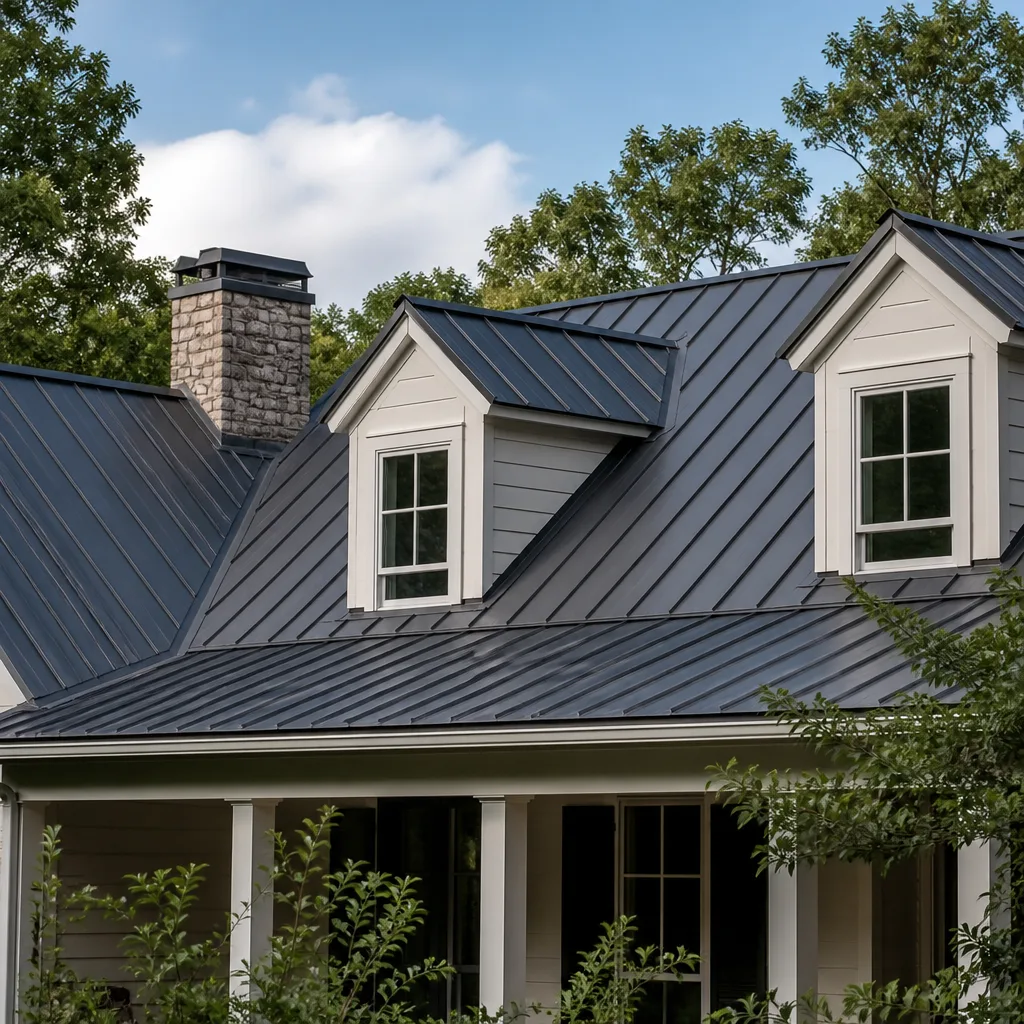 Metal roofing
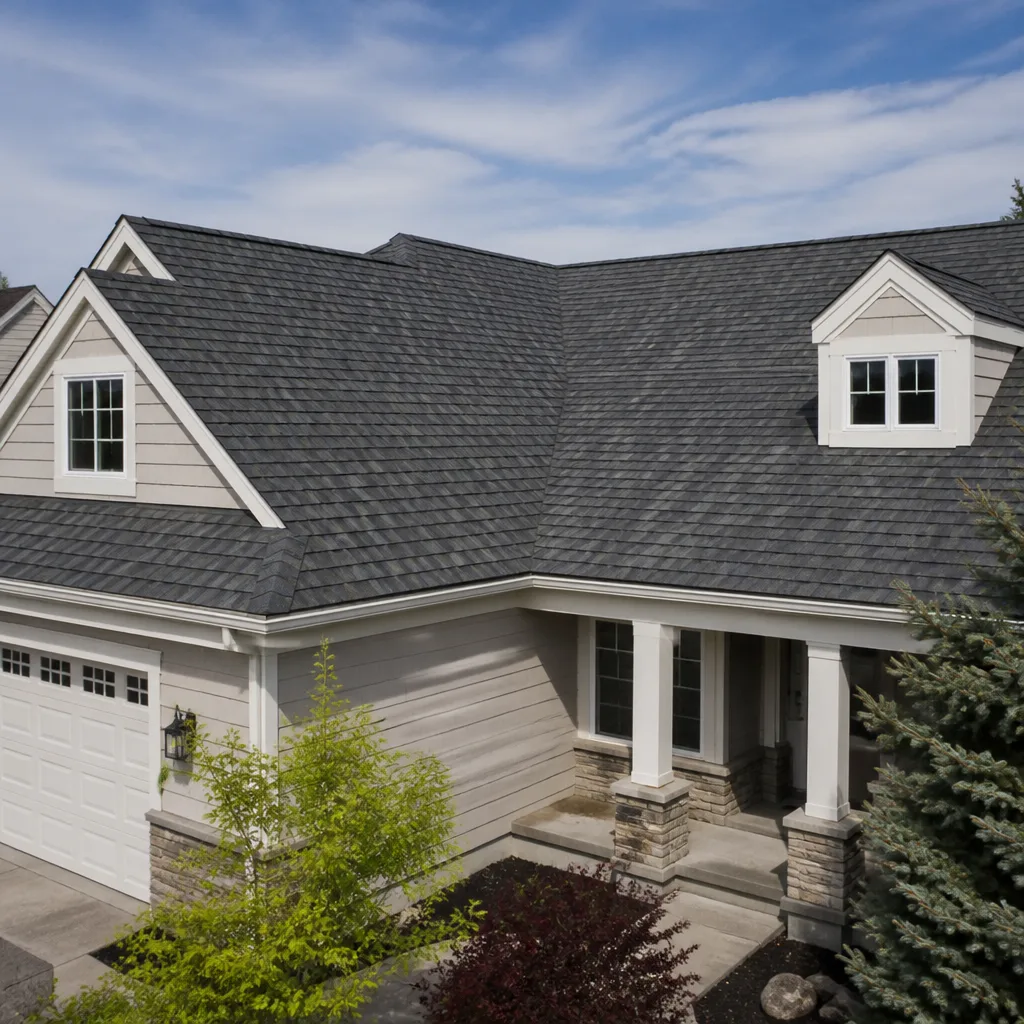 Architectural shingles
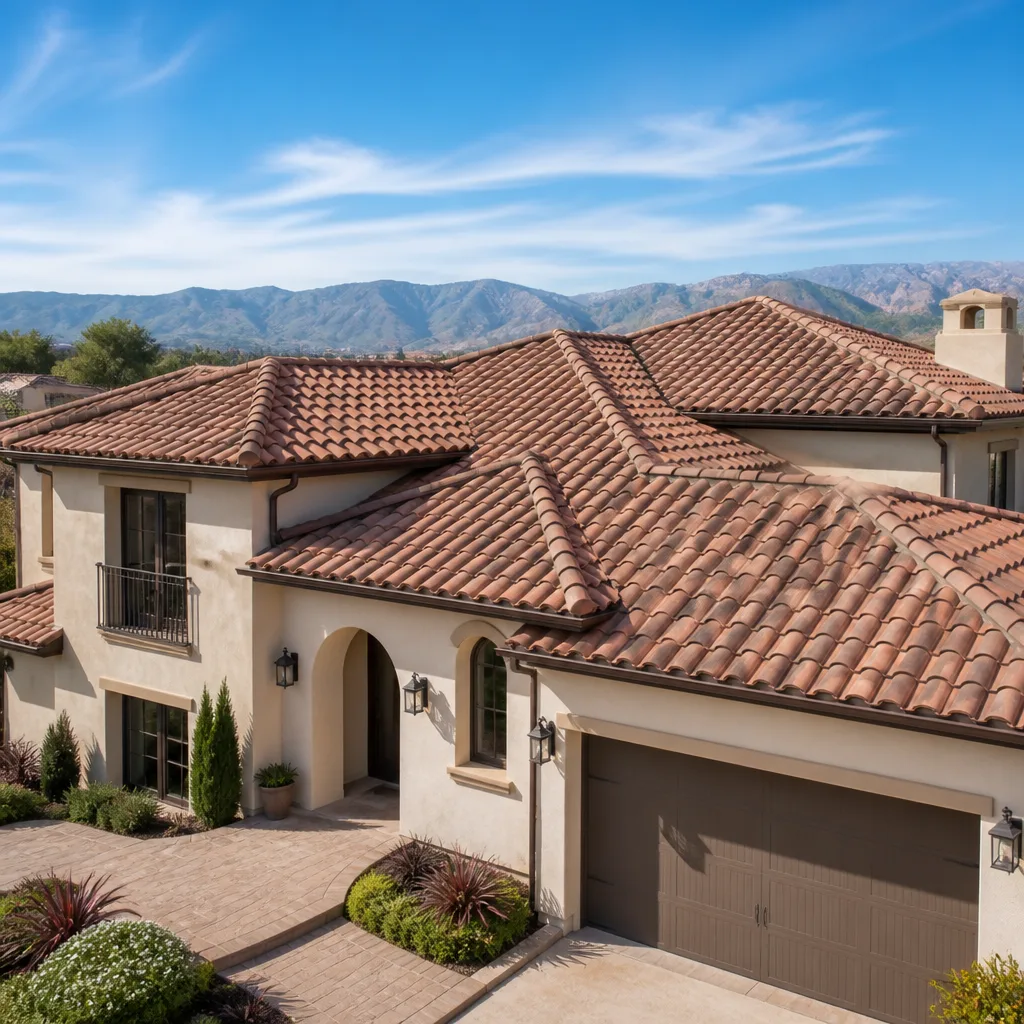 Tile roofing
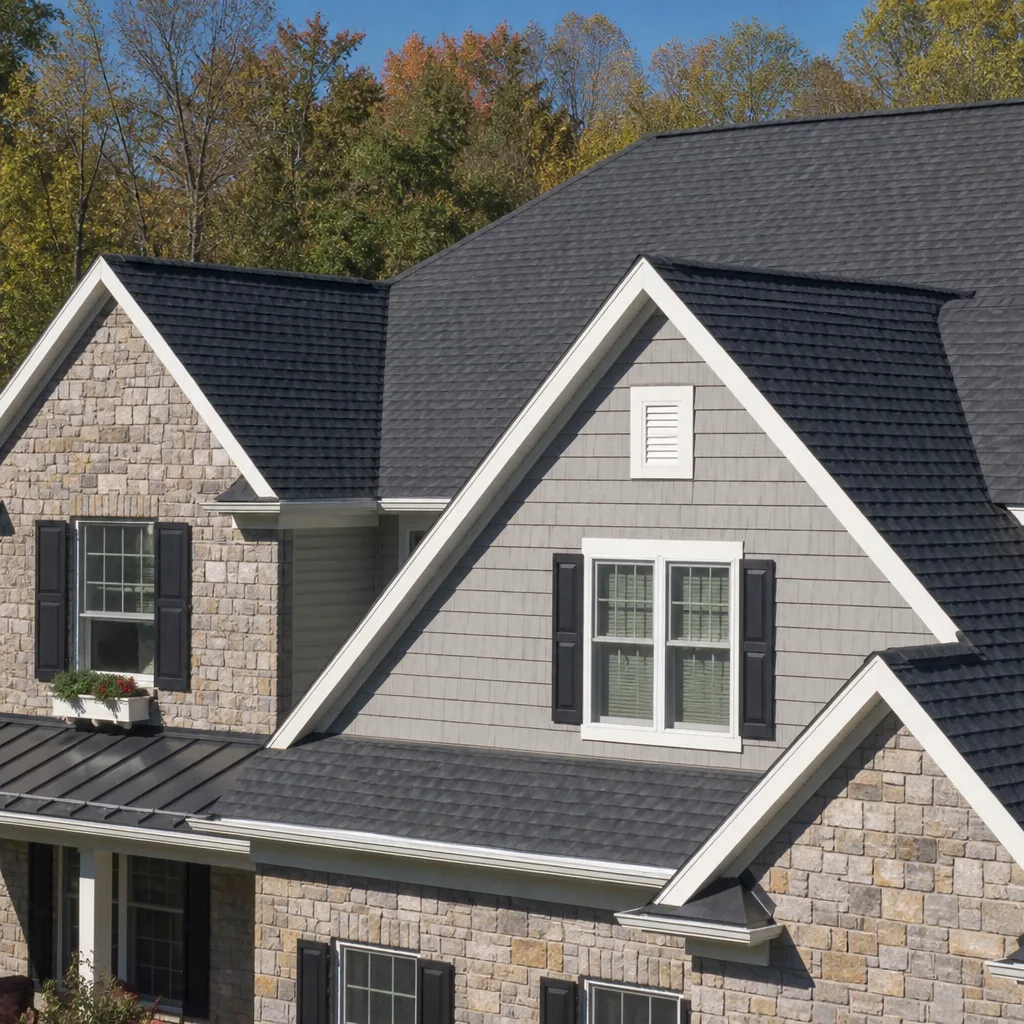 GAF
GAF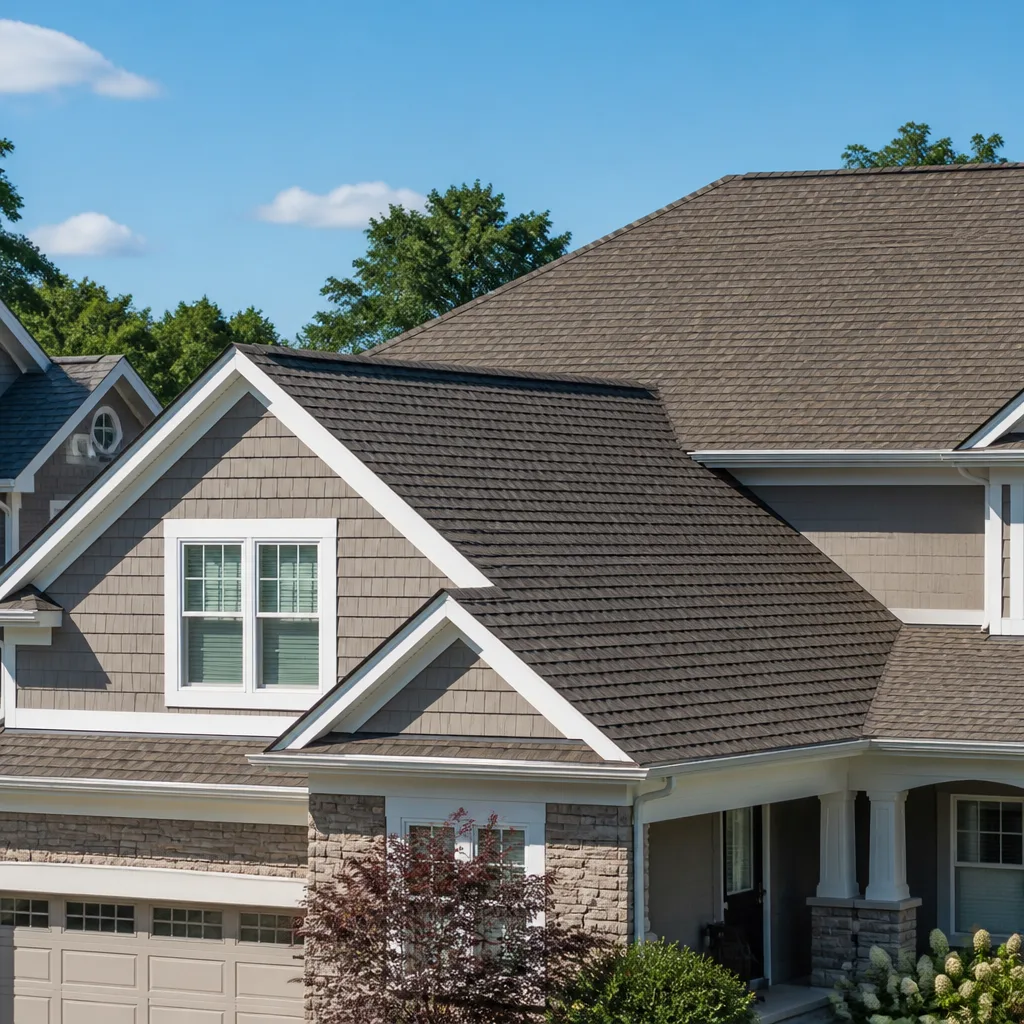 Owens Corning
 Flat & low-slope
Free roof inspection with deck photos before we talk money - GAF and Owens Corning certified installation
The Complete Guide to Roofing in Fort Lauderdale
In 2023, Citizens Property Insurance began non-renewing policies on roofs older than 15 years, a policy shift that turned a roofing decision into an insurance emergency for thousands of Broward County homeowners almost overnight. What had always been a long-term home improvement question became a deadline-driven financial decision, and many homeowners found themselves navigating permits, hurricane codes, and contractor vetting with no roadmap. This guide is that roadmap. Written from the ground up for Fort Lauderdale, it covers what actually matters here: Florida Building Code Chapter 15, salt-air degradation, the Citizens roof-age rule, legitimate contracts under Florida Statute 489, and the Broward County permit process. By the end, you will know how to make a roofing decision from knowledge, not pressure.
Quick Answer
Roofing in Fort Lauderdale means complying with Florida’s High-Velocity Hurricane Zone (HVHZ) building code, choosing materials that can withstand salt air and 140+ mph wind ratings, and timing your replacement around insurance eligibility rules that now scrutinize roof age down to the month. A full architectural shingle roof replacement in Fort Lauderdale typically runs $9,000 to $18,000 depending on square footage, pitch, and material grade, while a targeted repair usually lands between $350 and $1,800. Every legitimate job requires a Broward County permit, a written contract meeting Florida Statute 489 standards, and an inspection that verifies HVHZ fastening patterns before final sign-off.
Styles & brands we work with
Table of Contents
- Florida’s HVHZ Code: Why Fort Lauderdale Roofs Face Different Rules Than Orlando
- Salt-Air Corrosion: What the Intracoastal Does to Roofing Materials
- The Citizens Insurance Roof-Age Rule and What It Means for Your Policy
- Choosing Roofing Materials for Fort Lauderdale’s Climate
- What a Legitimate Fort Lauderdale Roofing Contract Must Include
- The Broward County Permit Process: Verify It Yourself
- What Roofing Actually Costs in Fort Lauderdale
- How to Choose a Roofing Contractor Without Opening the Door to a Stranger
Florida’s HVHZ Code: Why Fort Lauderdale Roofs Face Different Rules Than Orlando
Broward County sits inside Florida’s High-Velocity Hurricane Zone, a designation that changes what can legally be installed on your roof and how it must be fastened. A roof that passes inspection in Orlando, which sits outside the HVHZ, can fail in Fort Lauderdale because the code here requires different fastening patterns, different underlayment, and different uplift ratings. The distinction is not bureaucratic trivia. It is the difference between a roof that holds during a Category 4 and one that peels off in pieces.
Chapter 15 of the Florida Building Code governs roofing, and within the HVHZ, it mandates:
- Fastening patterns: More nails or staples per shingle than non-HVHZ zones require, with specific placement to resist uplift from 150+ mph winds.
- Underlayment standards: A double layer of ASTM-rated underlayment in many applications, sealed to prevent water intrusion even if shingles are lost.
- Drip edge and flashing requirements: Corrosion-resistant metal with minimum dimensions that exceed what inland counties allow.
- Wind-load documentation: Product approvals from Miami-Dade County or Florida Product Approval listings that certify materials for HVHZ use.
The practical takeaway: when you get a roofing quote in Fort Lauderdale, ask the contractor to confirm in writing that the materials and installation method meet HVHZ requirements, as covered in our Roof Repair Maintenance Checklist for Fort Lauderdale Homeowners. If they cannot answer that question directly, that is a warning sign. We have walked onto roofs in Victoria Park and Coral Ridge where out-of-town contractors installed non-HVHZ-rated underlayment, and the homeowners only found out when a re-roof inspection failed. The repair meant tearing off everything and starting over. Checking the HVHZ compliance up front costs nothing. Discovering it later costs thousands.
Salt-Air Corrosion: What the Intracoastal Does to Roofing Materials
Fort Lauderdale’s proximity to the Atlantic and the Intracoastal creates a roofing environment that inland Florida never experiences. Salt aerosol carries on ocean breezes and settles on roofing surfaces, accelerating corrosion on metals and degrading asphalt compounds faster than UV exposure alone. The result is a material lifespan that does not match what the manufacturer prints on the wrapper.
Here is what we observe in Fort Lauderdale, based on roofs we inspect across neighborhoods from Rio Vista to Imperial Point:
- Architectural asphalt shingles rated for 30 years: Realistically last 18 to 22 years within one mile of the Intracoastal. Beyond two miles, expect 22 to 27 years.
- Three-tab shingles rated for 20 years: Often show granule loss and edge curling by year 10 to 12 near the water.
- Metal roofing with standard fasteners: The panel itself may last 40+ years, but the fasteners will corrode and fail far sooner if they are not stainless steel or properly coated. In Fort Lauderdale, every metal roof fastener should be stainless.
- Tile roofing (concrete or clay): The tile survives salt air well, but the underlayment beneath it degrades faster. A tile roof near salt water often needs underlayment replacement around year 20 even when the tile looks fine.
The salt-air factor changes maintenance math too. If you live within a mile of the Intracoastal, an annual roof inspection is not optional, it is the cheapest way to catch corrosion at flashing points before it becomes a leak. Flashing, the metal joints where roof planes meet walls, chimneys, or skylights, is where salt air does its first damage. A $400 flashing repair caught early prevents a $4,000 ceiling and drywall bill later.
The Citizens Insurance Roof-Age Rule and What It Means for Your Policy
The Citizens Property Insurance roof-age policy changed the economics of roofing in Fort Lauderdale. The rule, implemented in 2023, allows Citizens to non-renew policies when a roof reaches 15 years of age for shingle roofs, unless the homeowner provides documentation proving the roof has at least five years of remaining life. That documentation typically requires a licensed inspector’s certification, and for many homeowners, the inspection reveals that a 15-year-old Fort Lauderdale roof near the Intracoastal is already nearing the end of its functional life.
What this means for you:
- Your insurance timeline now drives your roofing timeline. If your policy is with Citizens or any carrier adopting similar standards, you have a hard deadline tied to your roof’s age, not your roof’s condition.
- A new roof changes your premium. Many Fort Lauderdale homeowners see wind mitigation credits of 20% to 40% on the wind portion of their premium after installing an HVHZ-compliant roof with documented fastener patterns and a secondary water barrier.
- The 4-point inspection now carries more weight. Insurance companies use 4-point inspections to assess roof, electrical, plumbing, and HVAC condition. A roof that fails the 4-point often triggers a cancellation notice, not just a premium increase.
- Documentation matters as much as the roof itself. Keep your permit, your inspection reports, and your contractor’s wind mitigation documentation in one place. When the insurer asks, you will need them.
The Citizens rule has pushed many For Lauderdale homeowners to replace roofs that still look serviceable from the ground but cannot pass an insurance inspection. If you are in that position, know that a full roof installation in Fort Lauderdale with proper documentation is the single most direct way to protect both your home and your insurability.
Choosing Roofing Materials for Fort Lauderdale’s Climate
Fort Lauderdale’s climate punishes roofing materials in three ways: UV intensity, wind load, and salt air. The material you choose has to survive all three, and the wrong choice costs more than the difference in shingle price. Here is how the common options perform here, with real expectations, not manufacturer marketing language.
Architectural Asphalt Shingles
These are the workhorse of Fort Lauderdale roofing. Brands like GAF, CertainTeed, and Owens Corning all manufacture architectural shingles with Miami-Dade HVHZ product approvals, which is what Broward County requires. Expect a realistic lifespan of 18 to 25 years depending on your distance from salt water. Cost runs $9,000 to $14,000 for a typical 1,800-square-foot single-story home, including tear-off, underlayment, and HVHZ fastening.
Concrete and Clay Tile
Tile roofs are common in Fort Lauderdale’s higher-end neighborhoods, and for good reason, tile handles UV and salt air better than any asphalt product. The catch is weight. Your home’s structure must be engineered for tile, and if you are converting from shingle to tile, the additional structural work can add $10,000 to $20,000 to the job. Replacing tile on a home already built for it typically runs $25,000 to $45,000. Underlayment replacement is a separate recurring cost, budget for it around year 20.
Metal Roofing
Standing seam metal roofing has grown in Fort Lauderdale because it handles high wind exceptionally well and carries a lifespan that can reach 40 to 50 years with proper maintenance. The critical detail is the fastener material. Salt air will destroy standard coated fasteners within a decade near the Intracoastal. Stainless steel fasteners are the only acceptable choice here, and they add roughly 10% to the overall cost. A standing seam metal roof on a typical Fort Lauderdale home runs $18,000 to $35,000.
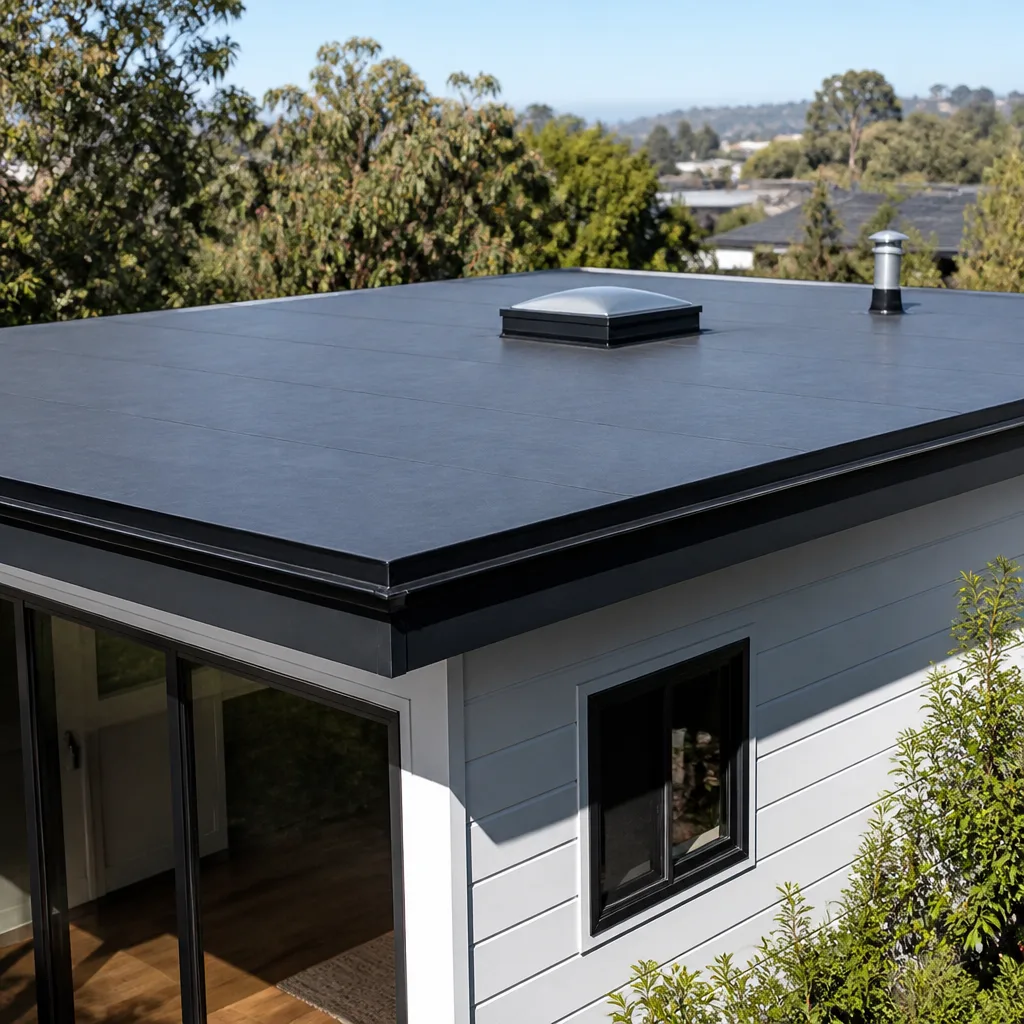
Flat and Low-Slope Roofing
Many mid-century Fort Lauderdale homes, particularly in neighborhoods like Sailboat Bend and parts of Poinsettia Heights, have flat or low-slope roofs. These require modified bitumen or TPO membrane systems rather than shingles. Expect $8 to $12 per square foot for a full replacement, and insist on a PE or architect sign-off on drainage calculations. Ponding water on a flat roof in Fort Lauderdale’s rainy season is a roof killer.
If you are comparing materials, the smartest question to ask a contractor is not “what is the best shingle” but “what material has a Miami-Dade product approval that matches my roof pitch and exposure.” That single question filters out contractors who do not understand Fort Lauderdale’s specific requirements.
What a Legitimate Fort Lauderdale Roofing Contract Must Include
Florida Statute 489 governs contractor agreements, and a legitimate Fort Lauderdale roofing contract is a legal document, not a handshake. When we write a contract for a roof repair in Fort Lauderdale or a full replacement, every line item is spelled out before a single nail is driven. Here is what the law and good practice require, and the three omissions that should make you walk away.
Your contract must include:
- The contractor’s license number. In Florida, roofing contractors must hold a state license. Verify it at the Florida DBPR website before signing anything.
- A written scope of work. Specific materials by brand and product line, underlayment type, fastener pattern, flashing details, and the removal of existing materials if applicable.
- The total price, itemized. Labor, materials, permit fees, and any anticipated extras. Not an estimate. A price.
- Start and completion dates. With a documented process for weather delays, which are a real factor in Fort Lauderdale’s rainy season.
- Warranty terms in writing. What is covered, for how long, and what the process is if something fails.
The three omissions that signal a contractor to walk away from:
- No permit fee listed. Every legal roofing job in Fort Lauderdale requires a permit. If the contract does not include the permit fee, the contractor plans to work unpermitted, which voids your insurance coverage and creates liability if the roof fails.
- No written warranty language. A verbal promise is not a guarantee. If the warranty is not in the contract, it does not exist.
- A refusal to provide the contractor’s license number or insurance certificate. No legitimate contractor withholds this. Walk away immediately.
Mercer Roofing Co Fort Lauderdale puts every price and every guarantee in writing before work starts. It is not a courtesy. It is the only responsible way to do business, and it is what protects you if anything goes wrong.
The Broward County Permit Process: Verify It Yourself
Every roofing job in Fort Lauderdale requires a permit pulled through Broward County’s ePermits system or the city’s building department if the property falls within city jurisdiction. The permit process protects you in ways that are not obvious until something goes wrong: it ensures the work is inspected at multiple stages, it verifies HVHZ compliance, and it creates a public record that your insurance company will reference when you file for wind mitigation credits.
Here is the step-by-step process a legitimate Fort Lauderdale roofing job follows:
- Application submission. The contractor or an expediter submits the permit application with product approvals, wind-load calculations, and the scope of work.
- Plan review. Broward County reviews the submission for HVHZ compliance. This typically takes 5 to 14 business days.
- Permit issuance. Once approved, the permit is issued and the work can legally begin. No work before this point. No exceptions.
- Inspections. A typical re-roof triggers a dry-in inspection (underlayment in place, before shingles go on) and a final inspection (complete roof, fasteners, flashing, and clean-up).
- Certificate of completion. After final inspection passes, the permit is closed and the certificate is issued. This is the document your insurance company wants to see.
Here is the part most homeowners skip: verify the permit yourself on the Broward County permit portal. Do not take the contractor’s word that the permit was pulled. A pay-by-the-job contractor who says “the permit is in process” but never actually files it leaves you with an unpermitted roof, an insurance company that will deny your wind mitigation credits, and a resale disclosure problem when you sell the home. Checking takes five minutes. Not checking can cost tens of thousands.
For homeowners working with a roofing company in Fort Lauderdale that handles permits properly, the process is invisible. You sign the contract, the permit gets pulled, the inspections happen, and you receive the closed permit and certificate at the end. That is how it should work.
What Roofing Actually Costs in Fort Lauderdale
Roofing prices in Fort Lauderdale vary by material, roof complexity, and the contractor’s overhead, but there are real market ranges you should know before you start calling. These figures reflect what we see across Fort Lauderdale for homes from 1,200 to 2,500 square feet with typical pitch and accessibility.
- Asphalt shingle repair (small leak, flashing, a few shingles): $350 to $900
- Larger repair (roof section, underlayment patch, multiple flashing points): $900 to $1,800
- Full architectural shingle replacement (tear-off and re-roof): $9,000 to $14,000 for 1,800 sq ft
- Full replacement with upgraded underlayment and ridge ventilation: $12,000 to $18,000
- Standing seam metal roof: $18,000 to $35,000 depending on square footage and fastener specification
- Tile roof replacement (home already engineered for tile): $25,000 to $45,000
- Flat/low-slope TPO or modified bitumen replacement: $8 to $12 per square foot
Permit fees are separate and typically run $150 to $500 depending on project scope and jurisdiction. A legitimate contractor will include the permit fee as a line item in your written price, not as an afterthought.
Every Mercer Roofing Co Fort Lauderdale home project starts with a written line-item price before any work begins. No change orders, no surprise line items on the invoice, no “we discovered additional damage” phone calls that double the cost. You will know the exact number before we touch your roof.
How to Choose a Roofing Contractor Without Opening the Door to a Stranger
The single most under-discussed risk in Fort Lauderdale roofing is not the materials or the weather, as our DIY vs Professional Roofing: The Fort Lauderdale Homeowner’s Decision Guide explores. It is the person who shows up at your door. Storm chasers, unlicensed operators, and short-term crews pass through South Florida after every hurricane season, and homeowners who would never let a stranger inside their home will open the door to a roofing salesman without asking a single question about who they are.
Here is how Mercer Roofing Co Fort Lauderdale handles the stranger-at-the-door problem, and why it matters more than most homeowners realize:
You know who is coming before they arrive. Every Mercer technician undergoes a background check and identity verification under the Threshold Verified standard. Before your appointment, we send the technician’s name and photo to you. When they knock, they are wearing a clean uniform and carrying a photo ID badge that matches the name and face you already have on your phone.
The price is written before work starts. Not an estimate that can change. A written price. Every time. No exceptions.
Every repair carries a written guarantee, and the 365-Day Done Right Promise backs every job. If the work is not right within a year, we make it right. If a repair fails, the second visit is free.
A live person answers the phone 24/7. Not a voicemail. Not a callback form. A human being. When you call (754) 354-1224, someone answers.
This is the Threshold Standard, and it is the framework every independently owned and operated Mercer Roofing location operates under. The Threshold Verified standard exists because roofing is one of the few home services where a stranger asks for access to your largest asset and you are supposed to just trust them. You should not have to just trust anyone. You should have proof.
Common Mistakes to Avoid
- Skipping the permit because the contractor offers a cash discount. An unpermitted roof voids your insurance coverage, fails resale disclosure, and leaves you with no legal recourse if the work is defective. The “discount” costs more than the permit.
- Choosing a material based on manufacturer lifespan claims without accounting for salt air. A 30-year architectural shingle works like a 30-year product in inland Florida. Within a mile of the Intracoastal in Fort Lauderdale, expect 18 to 22 years and plan your maintenance budget accordingly.
- Replacing a roof without checking insurance requirements first. If Citizens or your private carrier has a roof-age deadline, your material choice and the documentation you keep become insurance decisions, not just construction decisions. Get your 4-point inspection results before finalizing your roofing plan.
- Accepting a contract without itemized scope and warranty language. Florida Statute 489 exists to protect you. A contract that lacks itemized scope, a license number, or written warranty terms is not a contract, it is a liability.
- Not verifying the permit on the Broward County portal. Contractors do forget to pull permits. The portal check takes five minutes and protects your insurance standing. Do not skip it.
- Opening the door to a roofing contractor without verifying who they are. Ask for the license, the insurance certificate, and the name of the technician who will be on your roof. If any of those feel hard to get, that is your answer.
- Delaying a small flashing repair because the roof “looks fine.” Fort Lauderdale’s salt air works at the flashing joints first. A $400 flashing repair caught in year 8 prevents a $4,000 interior repair in year 10.
See the difference
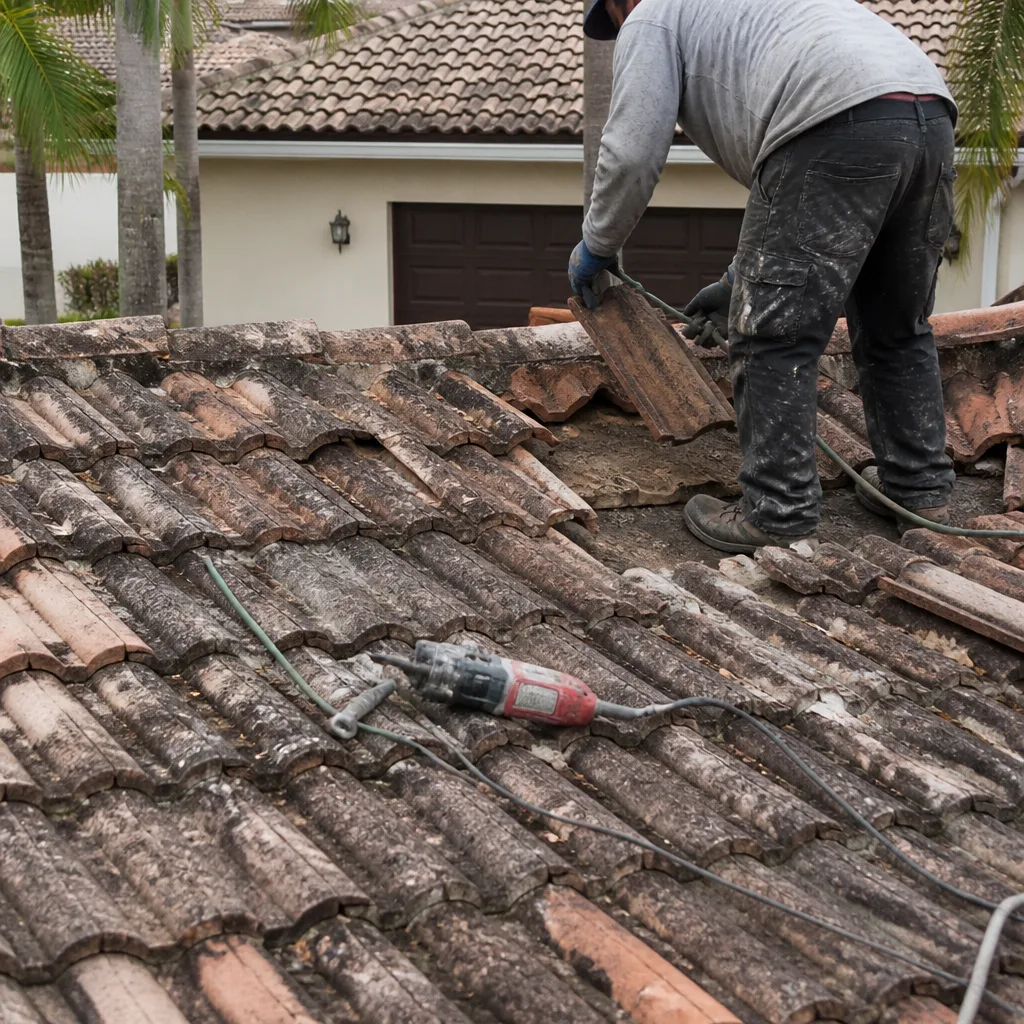 Before
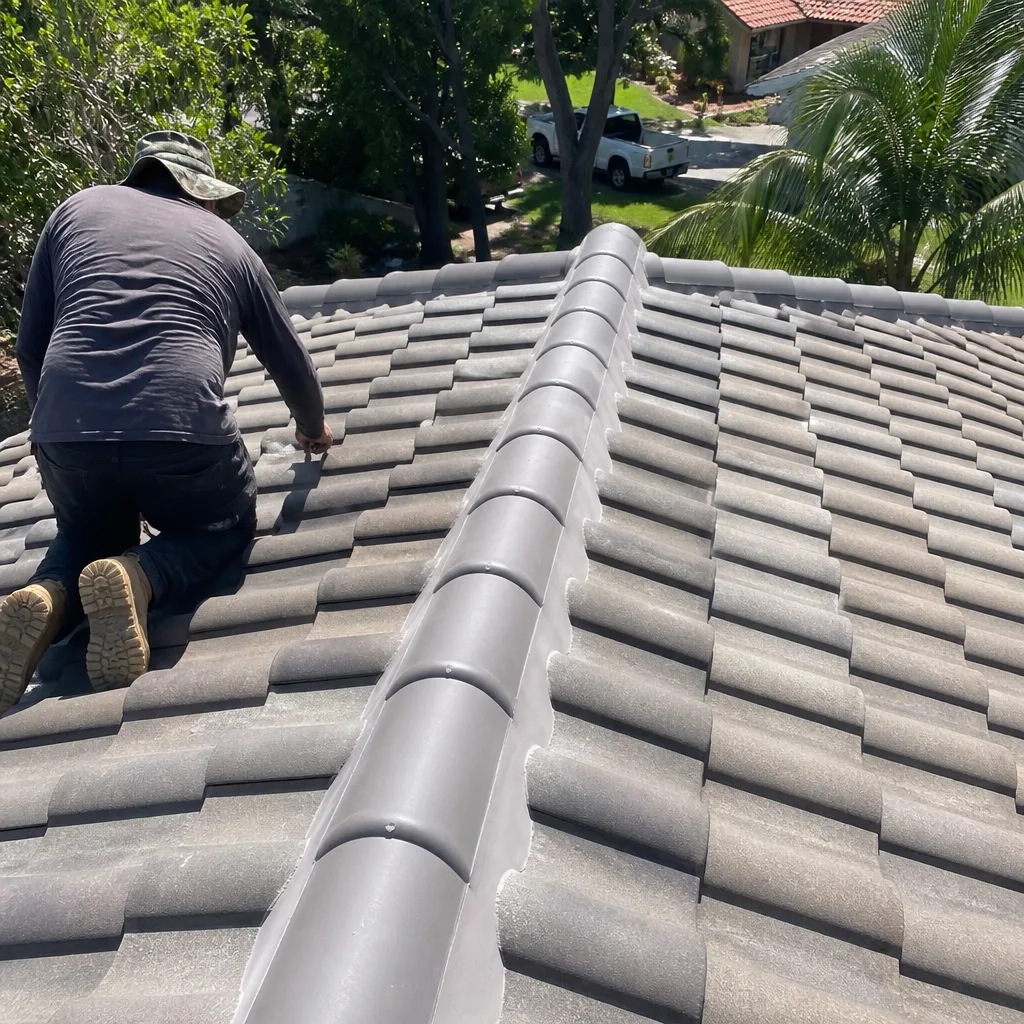 After
After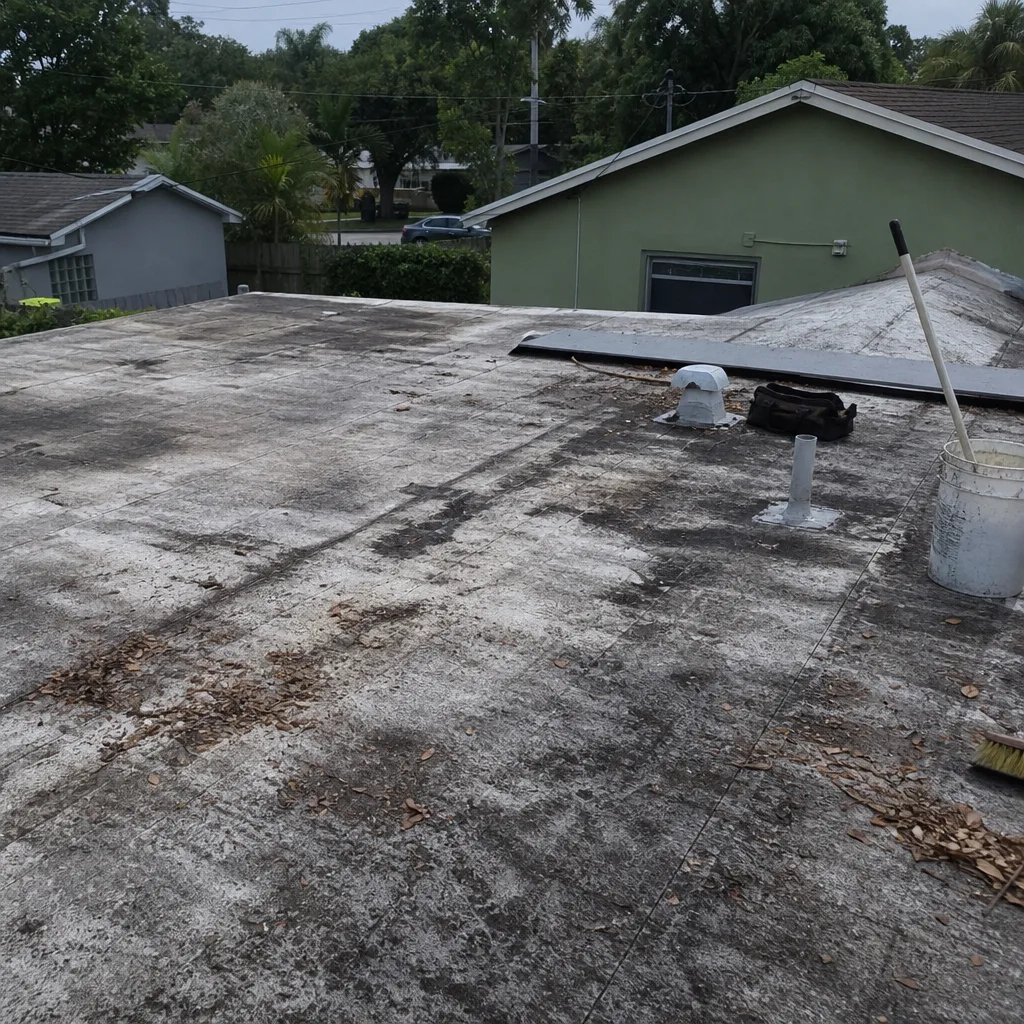 Before
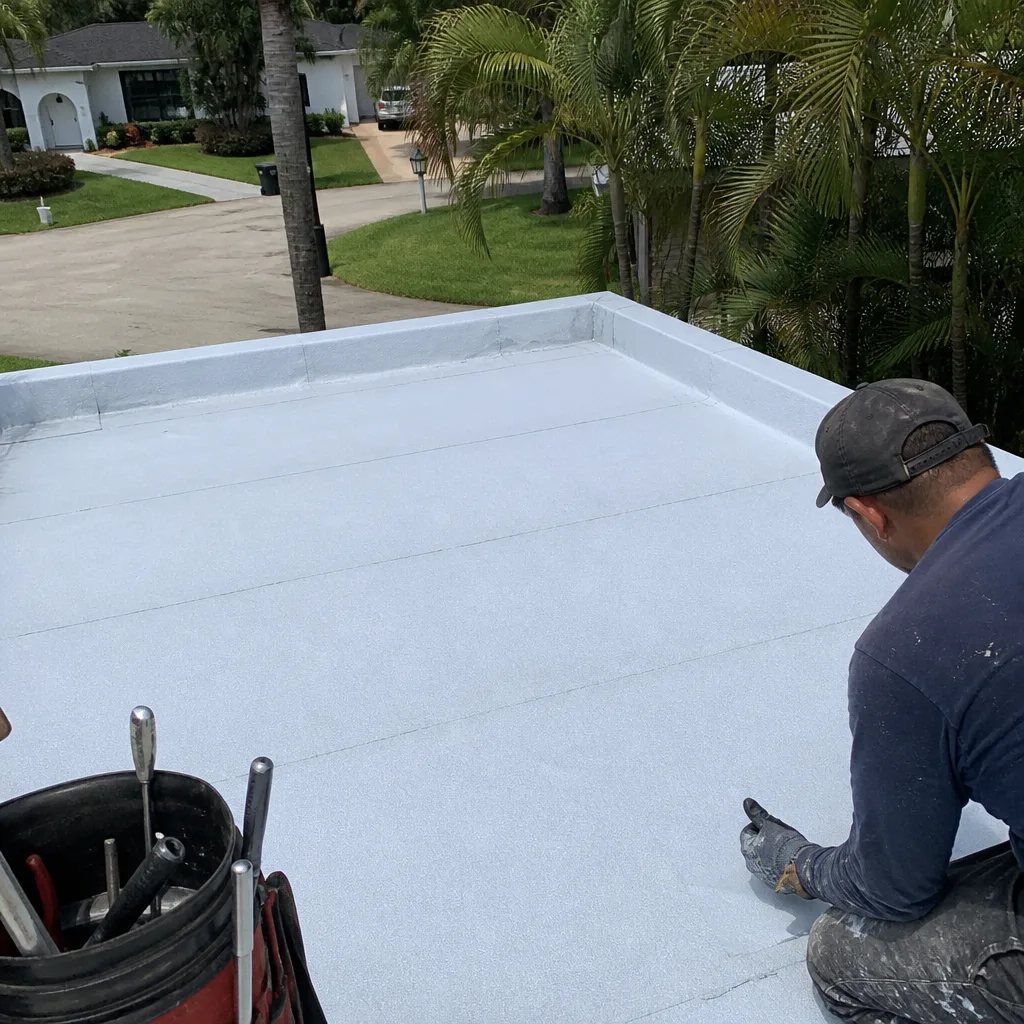 After
After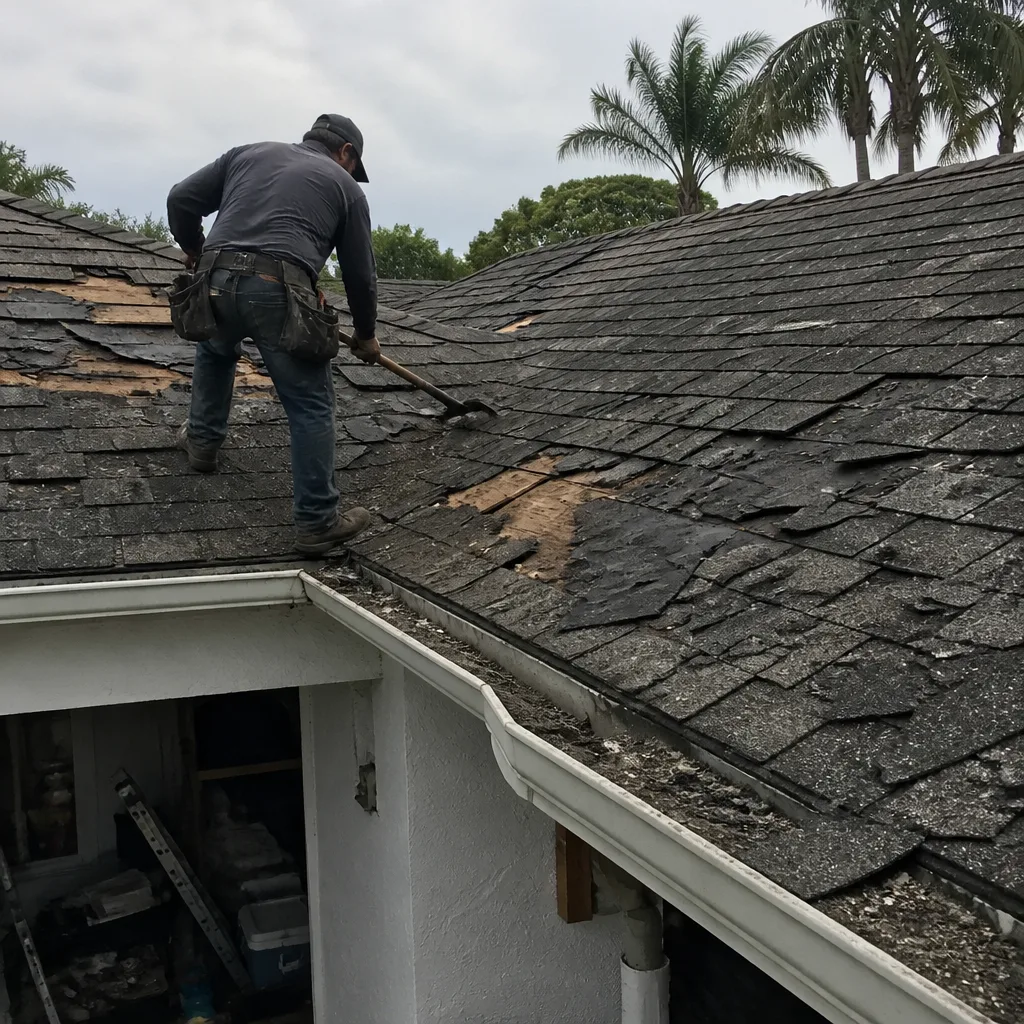 Before
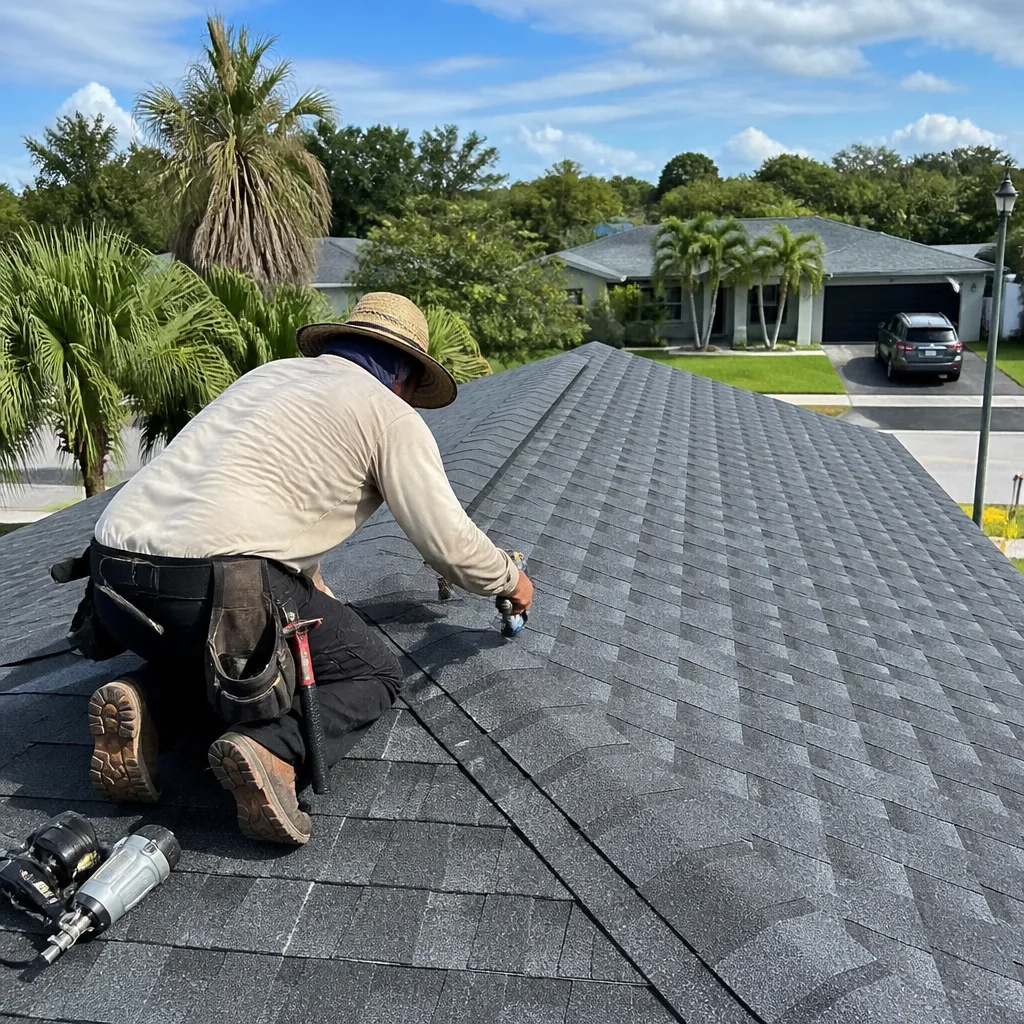 After
AfterWhen to Call a Professional
Some roofing problems announce themselves with a leak on the ceiling. Others do not. If you see granule loss in your gutters, shingles curling at the edges, rust at flashing points, or stains on the underside of your roof deck visible from the attic, call a professional before the problem reaches drywall. If a storm has passed through and you see any lifted shingles or displaced flashing, do not wait. Water intrusion in Fort Lauderdale’s humid climate breeds mold quickly, and the repair bill compounds monthly.
If you are uncertain whether your roof needs repair or replacement, that uncertainty is exactly what an inspection is for. Mercer Roofing Co Fort Lauderdale offers free estimates in Fort Lauderdale. Call (754) 354-1224 and we will give you a written price, a clear scope, and the name and photo of the technician who will arrive at your door.
Frequently Asked Questions
A full architectural shingle roof replacement in Fort Lauderdale typically costs $9,000 to $14,000 for a 1,800-square-foot home, with metal roofing running $18,000 to $35,000 and tile replacement $25,000 to $45,000. Your exact price depends on square footage, pitch, material choice, and accessibility. Call (754) 354-1224 for a written line-item quote, we provide the exact number before any work starts.
Yes. Every roofing job in Fort Lauderdale, including repairs, requires a permit through Broward County or the city building department if applicable. Verify the permit yourself on the county portal, a legitimate contractor will list the permit fee in your written contract.
An architectural shingle roof within one mile of the Intracoastal typically lasts 18 to 22 years, compared to 25 to 30 years inland. Salt-air corrosion accelerates degradation on shingles, flashing, and fasteners. Annual inspections are the most cost-effective protection for waterfront Fort Lauderdale homes.
Citizens Property Insurance has non-renewed policies on shingle roofs older than 15 years unless a licensed inspector certifies at least five years of remaining life. Private carriers have adopted similar standards. A new HVHZ-compliant roof with proper documentation often qualifies for wind mitigation credits of 20% to 40% on the wind portion of your premium.
Florida Statute 489 requires a roofing contract to include the contractor’s license number, an itemized scope of work, total price, start and completion dates, and warranty terms in writing. If the contract lacks any of these, do not sign it. Call (754) 354-1224 for a written price and a contract that meets every legal standard.
Ask for the technician’s name and photo before the visit, verify the company’s Florida DBPR license, and require a photo ID badge at the door. Mercer Roofing Co Fort Lauderdale sends every technician’s name and photo ahead of the appointment, and every tech arrives in uniform with a photo ID badge under the Threshold Verified standard.
The Bottom Line
Fort Lauderdale roofing decisions are shaped by three forces that most guides ignore: Florida’s HVHZ code, which dictates what can legally be installed here; salt-air degradation, which shortens material lifespans near the Intracoastal; and the Citizens roof-age rule, which ties your insurance standing to your roof’s age down to the month. Understanding these three forces, knowing what a legitimate contract must include under Florida Statute 489, and verifying your permit yourself on the Broward County portal puts you in control of the process. You do not need to become a roofer. You need to know what proof to ask for, and you need a contractor who provides it without hesitation. Mercer Roofing Co Fort Lauderdale puts every price, every guarantee, and every technician’s identity in writing before work starts. Call (754) 354-1224 for a free estimate, and you will know exactly what your roof needs, exactly what it costs, and exactly who will be showing up at your door.
Written by Grant Whitlock, Owner at Mercer Roofing Co Fort Lauderdale, serving Fort Lauderdale since 2000.